"Normal" is doing a lot of heavy lifting in that question.
The textbook answer is 2-7 days. But here is what the textbooks do not tell you: large cycle-tracking studies show that the 28-day cycle is far less universal than people were taught, and period length varies too, between people, between life stages, and even between months.
The more useful question is not only how long is a normal period. It is: is my period normal for me, and has it changed in a way that matters? This guide answers both.
The Numbers — What Research Actually Says
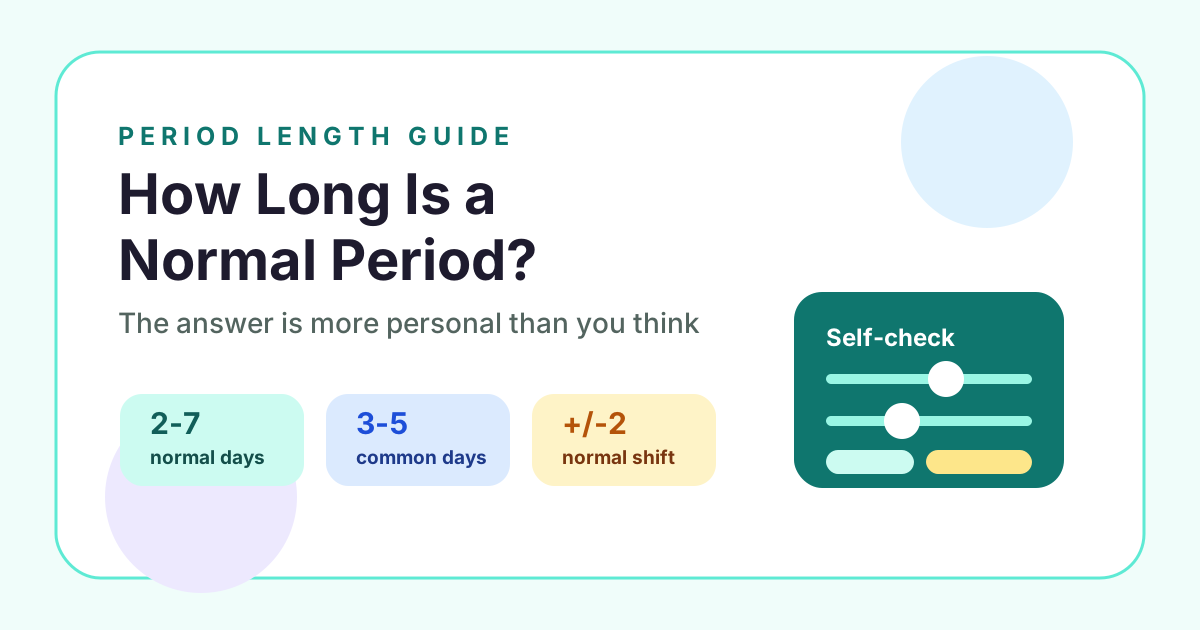
The standard normal period length is 2-7 days. The most common pattern is often 3-5 days. Normal blood loss is commonly described as roughly 30-80 mL across the whole period, although most people measure it by lived signs: how often protection needs changing, whether clots are present, and whether bleeding disrupts normal activity.
Large app-based research has also pushed back against the myth that everybody should have a 28-day cycle. In a study of more than 600,000 cycles, only about 13% were exactly 28 days long. The lesson is simple: a single textbook number is not the same thing as your baseline.
Period Length At A Glance
2-7 days
Normal range
Standard bleeding-duration range used clinically.
3-5 days
Most common
Many people cluster here, but it is not a requirement.
30-80 mL
Blood loss
Roughly 2-5 tablespoons across the whole period.
+/- 1-2 days
Normal variation
A small month-to-month shift is usually expected.
3+ days
Concerning change
A sudden shift from your baseline deserves tracking.
A period that is 5 days long can be normal. A 2-day period can be normal. A 7-day period can be normal. The question becomes more important when your usual 4-day period suddenly becomes 8 days, or your reliable 6-day period turns into 2 days for several cycles.
Personal Reference Map
Period Length by Life Stage — Your Personal Reference Map
Period length is not static. It changes throughout your life, so calibrate normal to where you actually are.
First 1-2 Years After Menarche
What's normal
- Highly variable, sometimes 2-10 days.
- Very light flow or spotting is common.
- Cycle length can be wider while ovulation matures.
What's happening: The brain-ovary hormone axis is still calibrating, so irregular output is expected.
When to see a doctor: See a doctor for no period by age 15, bleeding over 10 days, or soaking protection hourly.
Reproductive Years
What's normal
- Usually 3-7 days.
- Your own pattern should become fairly consistent.
- Flow is often heaviest on Days 2-3.
What's happening: Ovulatory cycles make the lining build, mature, and shed in a more predictable pattern.
When to see a doctor: A 3+ day change that persists for 2-3 cycles is worth mentioning.
After Hormonal Contraception
What's normal
- Combined pill bleeds are often 2-4 days.
- Progestin-only methods can cause irregular or absent bleeding.
- Natural cycles may take 1-3 cycles to return after stopping.
What's happening: Hormonal contraception overrides the natural cycle; pill bleeds are withdrawal bleeds, not true periods.
When to see a doctor: Ask for care if bleeding is heavy, prolonged, painful, or new for your method.
Postpartum & Breastfeeding
What's normal
- The first period after birth may be heavier or longer.
- Breastfeeding may delay period return.
- Early returning cycles can vary.
What's happening: Prolactin can suppress ovulation, and the first few returning cycles may be anovulatory.
When to see a doctor: Seek care for very heavy bleeding, fever, severe pain, dizziness, or symptoms that feel acute.
Perimenopause
What's normal
- Periods may get heavier and longer early on.
- They may become lighter and shorter later.
- Both patterns can happen in the same year.
What's happening: Fluctuating estrogen and more anovulatory cycles make the lining less predictable.
When to see a doctor: Any bleeding after 12 months without a period needs evaluation.
Perimenopause Period CalculatorIs My Period Length Normal?
"Is My Period Length Normal?" — The Self-Check Tool
Stop comparing yourself to a textbook. Compare yourself to yourself. If you are wondering how long is a normal period for your body, answer three questions. The result updates on your device only. No data is stored or transmitted.
Within your normal range
A variation of 1-2 days is normal from cycle to cycle. Your period length is consistent with your usual baseline.
This tool provides general guidance only. It does not replace medical advice.
When Periods Get Longer — What's Actually Going On
A period getting longer, especially if it is also heavier, is one of the most common reasons people ask for gynecology care. The medical frame is heavy or prolonged menstrual bleeding: bleeding that lasts more than 7 days, involves more than about 80 mL of blood loss, or interferes with daily life.
One longer cycle after stress, illness, travel, or a disrupted routine can happen. A pattern is different. If your period length change persists for 2-3 cycles, the most useful next step is to bring dates and flow details to a clinician.
Uterine fibroidsBenign muscle growths that can increase bleeding surface area.
What it is: Benign growths in or around the uterine wall.
How it causes change: They can enlarge the lining area and interfere with uterine contraction.
Other signs: Pelvic pressure, frequent urination, pain during sex.
Diagnosis method: Pelvic exam and ultrasound.
Endometrial polypsSmall lining growths that can disrupt normal shedding.
What it is: Overgrowths attached to the uterine lining.
How it causes change: They can cause irregular, prolonged, or between-period bleeding.
Other signs: Spotting between periods or bleeding after sex.
Diagnosis method: Transvaginal ultrasound, saline scan, or hysteroscopy.
AdenomyosisLining-like tissue grows into the uterine muscle.
What it is: Endometrial-type tissue is present within the muscle wall.
How it causes change: The muscle may not contract normally, so bleeding and pain can intensify.
Other signs: Severe cramps, heavy flow, enlarged tender uterus.
Diagnosis method: Ultrasound or MRI; diagnosis is often delayed for years.
Hormonal imbalanceAnovulatory cycles can make the lining build unevenly.
What it is: Ovulation does not happen, so progesterone does not regulate the lining.
How it causes change: Unopposed estrogen can lead to heavier, longer, less predictable shedding.
Other signs: Irregular cycles, skipped periods, acne, weight changes.
Diagnosis method: History, labs when indicated, and evaluation for PCOS or thyroid disease.
Copper IUDCan make periods heavier or longer, especially early on.
What it is: A non-hormonal IUD that creates a local inflammatory contraceptive effect.
How it causes change: Local prostaglandin changes can increase bleeding and cramping.
Other signs: Heavier flow and stronger cramps after insertion.
Diagnosis method: Clinical history; check placement if symptoms are severe.
HypothyroidismLow thyroid can be linked with longer, heavier periods.
What it is: The thyroid is underactive.
How it causes change: Thyroid hormones interact with ovulation and bleeding regulation.
Other signs: Fatigue, weight gain, cold sensitivity, constipation.
Diagnosis method: TSH blood test.
A note on adenomyosis
Adenomyosis is often under-recognized. Many people spend years being told severe bleeding and pain are ordinary before they get a clear explanation. If your periods are getting longer and pain is also escalating, that combination deserves to be taken seriously.
When Periods Get Shorter — What's Actually Going On
A period getting shorter is talked about less than heavy bleeding, but it can be just as confusing. The medical term sometimes used is hypomenorrhea: unusually light or short bleeding, often under 2 days or much lighter than your baseline.
Shorter bleeding is often benign, especially with hormonal contraception or a one-off stress cycle. It matters more when the change is persistent, sudden after a uterine procedure, connected with weight loss or over-exercise, or paired with symptoms of thyroid disease.
Hormonal contraceptionThe most common reason periods become shorter or lighter.
What it is: Hormonal methods thin or stabilize the uterine lining.
How it causes change: Less lining builds, so less needs to shed.
Other signs: Short withdrawal bleeds, spotting, or absent bleeding.
Diagnosis method: Medication history; pregnancy test if bleeding pattern changes unexpectedly.
PerimenopauseLate transition can bring lighter, shorter periods.
What it is: Ovarian hormone production becomes less consistent.
How it causes change: Lower estrogen can build a thinner lining.
Other signs: Skipped periods, hot flashes, sleep changes.
Diagnosis method: Clinical history and age pattern; rule out other causes when needed.
Low energy availabilityLow weight, under-fueling, or over-exercise can suppress cycles.
What it is: The brain reduces reproductive hormone signaling when energy is insufficient.
How it causes change: Ovulation may weaken or stop, making periods lighter or absent.
Other signs: Fatigue, cold intolerance, injury, missed periods.
Diagnosis method: History, nutrition review, labs if indicated.
HyperthyroidismOveractive thyroid may make bleeding shorter or lighter.
What it is: The thyroid produces too much hormone.
How it causes change: Cycle signaling can speed up or become irregular.
Other signs: Weight loss, anxiety, palpitations, heat sensitivity.
Diagnosis method: TSH and thyroid hormone blood tests.
Asherman's syndromeUterine scarring can reduce the lining available to shed.
What it is: Scar tissue forms inside the uterine cavity, often after a D&C.
How it causes change: Less healthy lining means less menstrual flow.
Other signs: New very light periods after a uterine procedure, infertility, recurrent miscarriage.
Diagnosis method: Hysteroscopy.
StressStress can shorten, lighten, delay, or pause periods.
What it is: Cortisol can interfere with GnRH, the signal that starts the cycle.
How it causes change: Ovulation may shift, weaken, or pause temporarily.
Other signs: Recent major stress, illness, travel, or sleep disruption.
Diagnosis method: History first; evaluate if persistent.
The Day-by-Day Flow Pattern — What's Normal Within Your Period
Your period is not uniform. A normal period length also has a normal internal rhythm: build, peak, taper.
Day 1
Light to medium
●●○○○
Full flow begins. This is your Day 1 for tracking.
Day 2
Heavy
●●●●○
Often one of the heaviest days; cramps can continue.
Day 3
Heavy
●●●○○
Heavy flow may continue, with small clots sometimes appearing.
Day 4
Medium
●●○○○
Flow usually starts clearly lightening.
Day 5
Light
●○○○○
Color may darken as older blood exits more slowly.
Day 6
Spotting
●○○○○
If your period lasts this long, spotting is common.
Day 7
Ending
●○○○○
Brown discharge can be oxidized blood, not automatically infection.
What's NOT normal within this pattern
- Clots the size of a quarter / 50p coin or larger.
- Soaking through a pad or tampon every hour for several hours.
- Bright red heavy flow that does not lighten by Day 4.
- Bleeding that stops and restarts repeatedly instead of gradually tapering.
Tracking Your Own Baseline — The Only Number That Actually Matters
The most useful thing you can do is establish your personal baseline rather than compare yourself with a population average. Track at least three cycles: start date, end date, flow level each day, clots and approximate size, and pain level from 1-10.
After three cycles, you will know your normal range, such as "4-6 days," and your usual flow pattern, such as "heavy Day 2, light by Day 5." That is the comparison point that matters. A period that is suddenly 2 days shorter than your usual can be more meaningful than a period that is 5 days long when the average is around 4-5.
Use the period calculator to keep the date estimate close, then add period length and flow notes so the pattern becomes visible.
When to See a Doctor — The Clear Thresholds
See a doctor promptly
- Period lasting more than 7 days.
- Soaking protection hourly for several hours.
- Clots the size of a quarter / 50p coin or larger.
- Fatigue, dizziness, or shortness of breath during bleeding.
- Any bleeding after 12 months without a period.
Mention at your next appointment
- Period length changed by 3+ days for 2-3 cycles.
- Periods are getting progressively heavier.
- Periods became much lighter after a uterine procedure.
- New or worsening pain arrived with the length change.
Bring the pattern
Three months of tracked data makes the appointment more concrete: days, flow, clots, pain, and what changed.
What to tell your doctor
My period used to be [X] days. For the past [Y] months, it has been [Z] days. The flow has [increased / decreased]. I also have [pain, clots, dizziness, spotting, or other symptoms].
Next step
Know your baseline. Track your pattern.