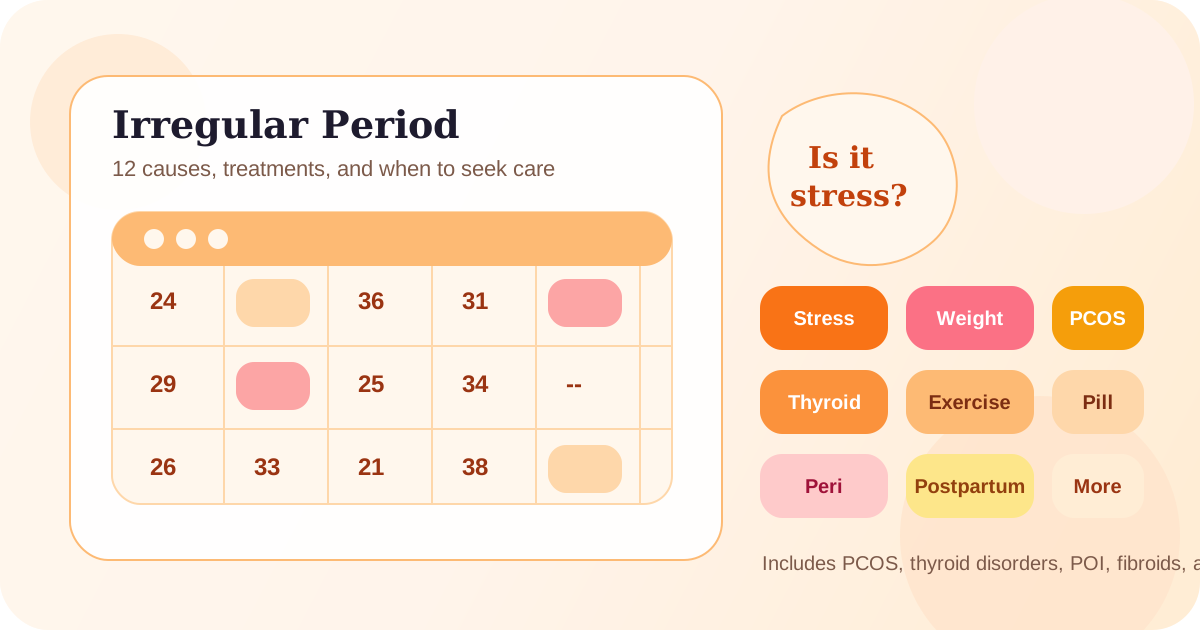
An irregular period is one of the most common reasons people look more closely at their cycle. Population studies suggest that menstrual irregularity affects a meaningful share of reproductive-age women, with estimates often landing in the mid-teens to mid-twenties depending on how irregularity is defined. That is why the question feels so common in real life: "Is my cycle still normal, or is something wrong?"
The answer depends on pattern, not panic. A stressful deadline, a long-haul trip, an illness, or a rapid change in eating and exercise can delay ovulation and make one period arrive early, late, or not at all. But repeated irregular cycles can also point to conditions such as PCOS, thyroid disease, abnormal uterine bleeding, or premature ovarian insufficiency.
This guide walks through the 12 most common causes of irregular periods, how each one changes the menstrual cycle, what solutions are supported by evidence, and when you should stop observing and start seeking medical evaluation. -> Jump to the 12 causes and -> Jump to when to see a doctor.
What Counts as an Irregular Period?
An irregular period is not a diagnosis by itself. It is a description of timing, frequency, or bleeding pattern. The most useful question is not whether your cycle matches the textbook 28-day example. It is whether your cycle has a predictable rhythm or has started varying in a way that is new, persistent, or disruptive.
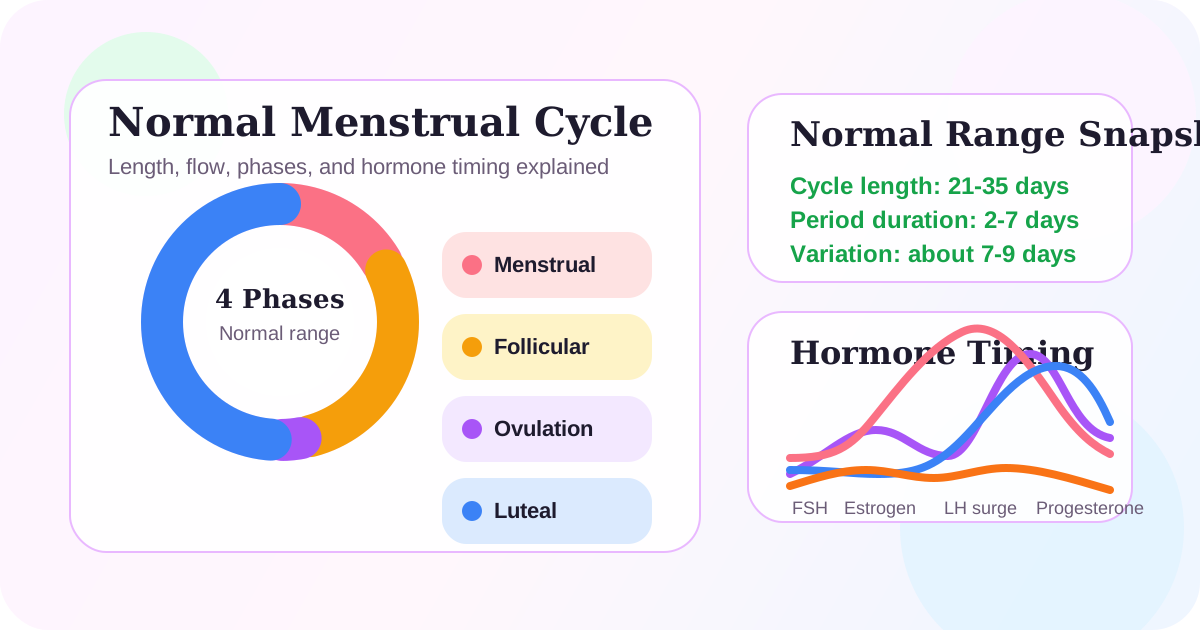
If you want a foundation for what a stable cycle normally looks like, read what is a normal menstrual cycle. That baseline makes it easier to see when an irregular menstrual cycle is only a mild fluctuation and when it is signaling a bigger endocrine or gynecologic issue.
The Medical Definition of Irregular Cycles
In adult gynecology, irregularity is usually defined by cycle length variability, consistently short or long cycles, or complete absence of periods. Guidance from ACOG guidelines uses the menstrual cycle as a vital sign because cycle timing can be one of the earliest visible clues that a hormonal system is under strain.
Medical Definition: Irregular Period
- Cycle length varies by more than 7 to 9 days from month to month.
- Cycles are consistently shorter than 21 days.
- Cycles are consistently longer than 35 days.
- No period for 3 or more consecutive months if you are not pregnant.
Source: ACOG menstrual-cycle guidance and amenorrhea evaluation guidance.
How Much Variation Is Normal?
Some variation is expected in almost every menstrual cycle. A difference of a few days from one month to the next is common, especially around illness, travel, acute stress, or recovery from a lifestyle change. The line starts to matter when the swing is larger than about a week and keeps happening.
It also matters whether the irregularity is new. A person whose cycle has always been 32 to 35 days apart is different from someone who used to be 28 days almost every month and is now suddenly bouncing between 23 and 40 days. A new irregular menstrual cycle is often more clinically meaningful than a stable long-standing pattern.
Cycle Variation Guide
| Variation | Status | Action |
|---|---|---|
| 1 to 7 days | Normal | No action needed |
| 7 to 9 days | Borderline | Monitor for 2 to 3 cycles |
| 9 to 14 days | Irregular | Track and consider evaluation |
| > 14 days | Very irregular | See a doctor |
| No period | Amenorrhea | See a doctor if 3+ months |
A once-or-twice-a-year change does not carry the same meaning as 3 irregular cycles in a row. Repetition is what turns a one-off late period into a true irregular menstrual cycle pattern.
Irregular vs. Late vs. Missed Period
These terms are often used interchangeably online, but they are not identical. A late period is usually one unexpectedly delayed bleed. An irregular period is a pattern of unpredictable timing. A missed period not pregnant is a skipped cycle, which becomes amenorrhea if it continues for 3 months or more.
Irregular vs. Late vs. Missed
Late period: more than about 5 days past the predicted date, usually as a single event.
Irregular period: a pattern of unpredictable cycle lengths across 3 or more cycles.
Missed period: one full expected cycle passes with no bleeding.
Amenorrhea: no period for 3 or more consecutive months when not pregnant.
The 12 Most Common Causes of Irregular Periods
Irregular periods rarely have a single explanation that fits everyone. Below are the causes of irregular periods you are most likely to see in clinic conversations, fertility workups, and online search behavior. Each cause affects the hormonal chain in a slightly different way, which is why the right solution depends on the mechanism rather than the symptom alone.
Cause #1 - Stress
Cause #1
Stress
How common
Very common and often temporary.
Cycle effect
Delayed or skipped ovulation can push the next bleed later or skip it entirely.
Stress is one of the most common irregular period causes because the menstrual cycle depends on a steady conversation between the brain and the ovaries. When emotional or physical stress rises, the hypothalamic pituitary adrenal axis pushes out more cortisol. That stress response can suppress the hypothalamic pituitary ovarian axis, especially the GnRH pulses that help trigger LH and FSH. Once ovulation shifts, everything else in the cycle shifts with it.
Acute stress and chronic stress can both do this. Acute stress might mean an exam week, illness, bereavement, or a long-haul flight. Chronic stress might mean months of anxiety, sleep deprivation, caregiving strain, or burnout. Even positive stress, such as wedding planning or international travel, can create enough physiological disruption to produce an irregular period.
The good news is that stress-related irregularity is usually reversible. The practical goal is not perfect calm; it is lowering the overall stress burden and supporting the body with sleep, regular meals, and some degree of nervous-system recovery. Use our period tracker to see whether stress spikes line up with cycle shifts over time.
Cause #2 - Significant Weight Changes
Cause #2
Significant Weight Changes
How common
Common, especially after dieting, illness, or rapid weight gain.
Cycle effect
Body-fat and energy changes alter estrogen signaling and ovulation timing.
Fat tissue is not just a storage site. It is hormonally active, and estrogen production is part of that story. When body weight drops quickly or falls too low, estrogen levels can become insufficient to sustain a normal ovulatory rhythm. This is one common path to hypothalamic amenorrhea. When body weight rises substantially, particularly in the setting of insulin resistance, hormone balance may also become less predictable and cycles may lengthen or become absent.
The risk is not limited to BMI alone. The speed of change matters. Rapid weight loss from crash dieting, gastrointestinal illness, bariatric surgery, overtraining, or severe stress is often harder on the cycle than a gradual shift. Likewise, quick weight gain can unmask metabolic issues that were already present.
If significant weight change is behind the irregular period, the solution is usually gradual stabilization rather than another extreme correction. Adequate calories, enough fat and protein, correction of nutritional deficiencies, and a realistic long-term plan do more for cycle recovery than aggressive dieting ever will.
Cause #3 - Polycystic Ovary Syndrome (PCOS)
Cause #3
PCOS
How common
One of the most common endocrine causes of an irregular menstrual cycle.
Cycle effect
Infrequent or absent ovulation often leads to cycles longer than 35 days or fewer than 8 periods per year.
PCOS is one of the most searched causes of irregular periods because it often shows up in early adulthood and can affect cycle timing, skin, hair, metabolism, and fertility all at once. Current international guidance estimates that PCOS affects roughly 8% to 13% of reproductive-age women, and many remain undiagnosed for years. The core issue is inconsistent ovulation driven by androgen excess, insulin resistance, or both.
The diagnostic framework commonly referred to as the Rotterdam PCOS criteria requires that clinicians look for 2 of 3 features after ruling out other causes: irregular or absent ovulation, clinical or biochemical hyperandrogenism, and polycystic ovarian morphology on ultrasound. That means PCOS cannot be confirmed from symptoms alone, and not everyone with ovarian cysts has PCOS.
PCOS Rotterdam Criteria (2 of 3 required)
1. Irregular or absent ovulation, often cycles longer than 35 days or fewer than 8 periods per year.
2. Clinical or biochemical hyperandrogenism such as excess hair growth, acne, or elevated testosterone.
3. Polycystic ovaries on ultrasound after excluding other explanations.
Diagnosis requires ruling out thyroid disease, hyperprolactinemia, and other endocrine causes first.
Clues that PCOS may be involved include acne, facial or body hair growth, scalp hair thinning, central weight gain, insulin resistance, or infertility. Treatment depends on your goal. If you want regular bleeding, combined hormonal contraception is often used. If you are trying to conceive, weight management, insulin-sensitizing therapy in selected cases, and ovulation-induction drugs such as letrozole may matter more.
Cause #4 - Thyroid Disorders
Cause #4
Thyroid Disorders
How common
Common endocrine cause that is often overlooked at first.
Cycle effect
Both hypothyroidism and hyperthyroidism can change bleeding frequency, heaviness, and ovulation.
Thyroid hormones help regulate metabolism, temperature, and energy use, but they also interact closely with reproductive hormones. When thyroid function is too low or too high, estrogen metabolism, prolactin signaling, and ovulation timing can all change. That is why irregular periods thyroid queries are so common: a thyroid problem can present as a menstrual issue before it is recognized as an endocrine one.
Hypothyroidism is more likely to cause heavier periods, shorter cycles, or occasionally absent periods. Hyperthyroidism tends to cause lighter, less frequent bleeding. Many people also notice fatigue, hair changes, weight shifts, or temperature intolerance, which is why menstrual symptoms should not be looked at in isolation.
Thyroid Disorder Symptoms
| Hypothyroidism | Hyperthyroidism |
|---|---|
| Fatigue and weight gain | Weight loss and anxiety |
| Cold sensitivity | Heat sensitivity |
| Heavy or frequent periods | Light or absent periods |
| Dry skin and hair loss | Sweating and rapid heartbeat |
| Depressed mood | Restlessness and tremor |
A simple TSH blood test is usually the first and most useful screening step.
This is one of the most treatable irregular period causes, which is why thyroid testing sits so early in many medical workups. Once thyroid levels normalize, cycles often improve over the following 3 to 6 months.
Cause #5 - Excessive Exercise
Cause #5
Excessive Exercise
How common
Most common in endurance athletes, dancers, gymnasts, and intense recreational trainers.
Cycle effect
Low energy availability can suppress GnRH and stop or delay ovulation.
Exercise itself is not the problem. The risk comes from low energy availability, meaning the body does not have enough energy left over after training to support normal reproductive function. In that context, the brain reads the environment as metabolically unsafe and down-regulates ovulation. The result can be an irregular period, a missed period, or complete amenorrhea.
This is why the older term athletic amenorrhea is now discussed together with the female athlete triad and the broader RED-S framework. The cycle is often the first signal that the body is under-fueled. Bone health can become the second signal if the problem continues.
Risk is highest in sports that reward leanness or involve very high training volumes. The practical fix is usually more calories, better recovery, smarter periodization, and sometimes temporarily reducing training intensity. A sports dietitian can be more useful here than simply "trying harder" to eat better.
Cause #6 - Hormonal Birth Control (Starting or Stopping)
Cause #6
Hormonal Birth Control
How common
Very common around method changes.
Cycle effect
Starting may cause breakthrough bleeding; stopping may reveal your natural cycle pattern again.
Hormonal contraception changes the hormonal environment on purpose, so irregular bleeding during the first few months after starting a method is not unusual. Breakthrough bleeding or spotting is especially common with progestin-only methods, implants, and hormonal IUDs during the adjustment phase.
After stopping hormonal contraception, the question becomes how quickly your natural cycle returns. Many people see a period within 1 to 3 months, but injectable contraception is the major exception and can take much longer. Sometimes so-called post-pill amenorrhea is not caused by the pill itself. It is the unmasking of an older issue such as PCOS, thyroid disease, or low energy availability that was harder to see while the method was controlling bleeding.
Cycle Return After Stopping Birth Control
| Method | Typical Return Time | Notes |
|---|---|---|
| Combined pill | 1 to 3 months | Ovulation often resumes quickly. |
| Progestin-only pill | 1 to 3 months | Shorter transition for many users. |
| Hormonal IUD | 1 to 3 months | Spotting can happen during the transition. |
| Copper IUD | Next cycle | No hormones, so your natural cycle resumes immediately. |
| Implant | 1 to 3 months | Temporary spotting is common. |
| Injectable (Depo) | 3 to 18 months | Longest average delay in cycle return and fertility timing. |
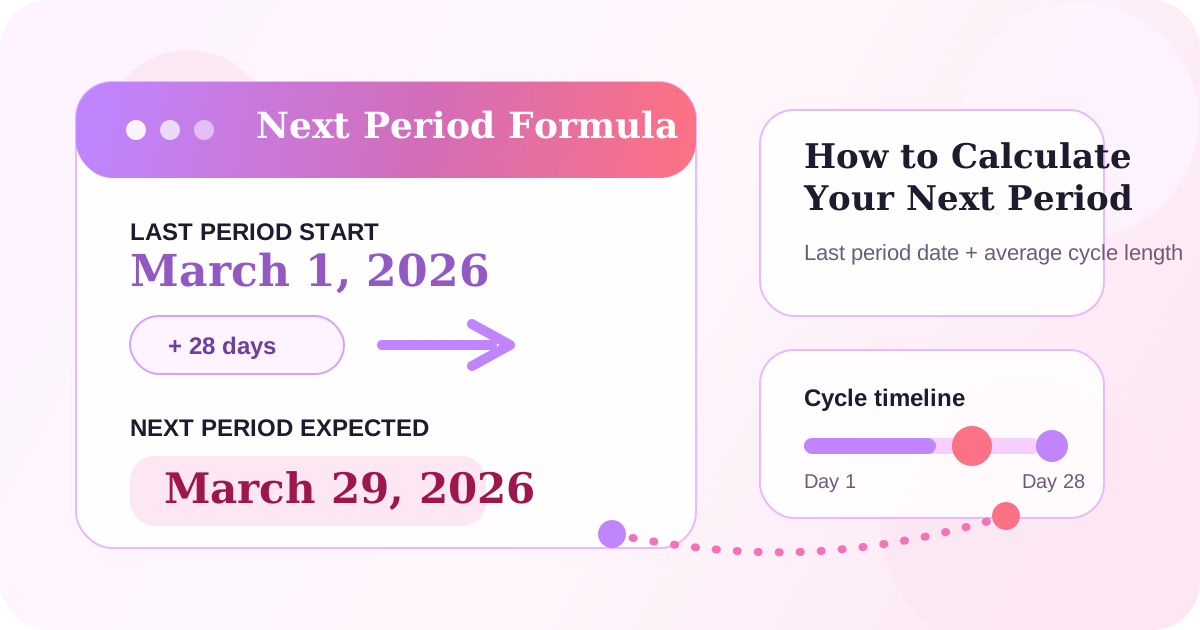
If you are wondering about fertility timing while your cycle is resetting, treat any safe period calculator estimate as rough guidance only. With irregular periods after stopping birth control, ovulation may not happen when a calendar would normally predict it.
Cause #7 - Perimenopause
Cause #7
Perimenopause
How common
Universal life stage, usually beginning in the 40s.
Cycle effect
Cycles often become shorter first, then longer, heavier, lighter, or skipped.
Perimenopause is the transition leading up to menopause, and it often lasts 4 to 10 years. During this stage, the ovaries still work, but they do so less predictably. Estrogen and progesterone fluctuate more dramatically, which makes an irregular cycle common rather than exceptional.
The typical pattern is not perfectly orderly, but many people notice cycles shorten before they lengthen and become more erratic. Flow may also change. Some periods become heavier, others lighter. Hot flashes, sleep disturbance, mood shifts, and night sweats often arrive at the same time.
Age is the strongest clue here. Irregular periods in your 40s are often perimenopause, but not every change is explained by age alone. Sudden heavy bleeding, bleeding between periods, or symptoms of anemia still need evaluation because fibroids, polyps, and endometrial problems become more common at the same life stage.
Cause #8 - Breastfeeding and Postpartum
Cause #8
Breastfeeding and Postpartum
How common
Very common after childbirth.
Cycle effect
Prolactin suppresses ovulation, often delaying the return of regular bleeding.
The postpartum months are hormonally unique. Prolactin rises with breastfeeding and suppresses the GnRH pulses that normally help trigger ovulation. That is why exclusive breastfeeding can delay the return of an irregular period or prevent bleeding for months.
Not breastfeeding often means periods return around 6 to 8 weeks postpartum. Exclusive breastfeeding can delay them for 6 months or longer. The important nuance is that ovulation can happen before the first postpartum period arrives. In other words, no bleeding does not automatically mean no fertility.
Lactational amenorrhea is a real physiologic effect, but it has limits as contraception. If your feeding pattern changes, your baby sleeps longer stretches, or solids are introduced, the window of reliable cycle suppression narrows quickly.
Cause #9 - Uterine Fibroids or Polyps
Cause #9
Uterine Fibroids or Polyps
How common
Fibroids are very common by midlife.
Cycle effect
More often cause heavy, prolonged, or between-period bleeding than pure cycle-length changes.
Fibroids are benign muscle tumors of the uterus. Polyps are focal overgrowths of the uterine lining. Both can change bleeding patterns, but they usually do so by altering flow volume or causing unexpected spotting rather than by changing ovulation itself. That means some people describe them as an irregular period even when the issue is actually abnormal uterine bleeding.
Fibroids become increasingly common with age and affect the majority of women by age 50, although many never cause symptoms. When symptoms do occur, the big ones are heavy bleeding, long periods, pressure symptoms, clotting, or bleeding between periods. Polyps are smaller but can create persistent spotting or postcoital bleeding.
Ultrasound is usually the first test. Hysteroscopy may be needed if a polyp is suspected. Some fibroids and polyps require no treatment at all. Others are managed with hormones, hysteroscopic removal, or more fertility-sensitive surgery depending on symptoms and reproductive plans.
Cause #10 - Premature Ovarian Insufficiency (POI)
Cause #10
Premature Ovarian Insufficiency
How common
Uncommon but clinically important, affecting about 1% of women under 40.
Cycle effect
Ovarian function declines early, leading to irregular or absent periods before age 40.
POI means the ovaries are no longer functioning normally before age 40. It is not the same as natural menopause because ovarian activity can be intermittent. Some people with POI still ovulate occasionally and a minority conceive spontaneously, but the overall ovarian reserve is significantly reduced.
Symptoms include irregular periods, missed periods, hot flashes, vaginal dryness, sleep changes, and infertility. Diagnosis usually requires persistently elevated FSH on repeat testing, plus a careful review of medications, autoimmune history, genetic clues, and prior ovarian surgery or cancer treatment.
POI matters well beyond fertility because low estrogen at a young age affects bone density, cardiovascular health, and quality of life. That is why hormone replacement therapy is usually recommended until the expected age of natural menopause unless there is a reason not to use it.
Cause #11 - Eating Disorders
Cause #11
Eating Disorders
How common
Often under-recognized because people may hide symptoms.
Cycle effect
Low energy availability, nutritional deficiency, and physiologic stress can stop ovulation.
Eating disorders are not lifestyle choices and they are not vanity problems. They are serious illnesses that can affect the heart, bones, brain, fertility, and the menstrual cycle. For many people, loss of periods is the first visible sign that the body is under severe metabolic stress.
In anorexia nervosa, low body weight and under-fueling often suppress ovulation entirely. In bulimia and other eating disorders, the pathway may involve electrolyte shifts, malnutrition, erratic intake, or high stress. The important clinical point is the same: an irregular period in this setting is a warning signal, not something to "power through."
Recovery is possible, but it usually requires more than weight gain alone. Nutrition rehabilitation, therapy, medical monitoring, and time are all part of restoring a stable cycle. If this section feels close to home, please read it as an invitation toward support, not judgment.
Support Resources
If you or someone you know is struggling with an eating disorder, help is available.
NEDA Helpline: 1-800-931-2237
Crisis Text Line: Text "NEDA" to 741741
Cause #12 - Chronic Illness and Medications
Cause #12
Chronic Illness and Medications
How common
Varies widely by condition and treatment.
Cycle effect
Illness, inflammation, high prolactin, adrenal dysfunction, and some medicines can all affect cycle timing.
Not every irregular period starts in the reproductive system. Chronic illness can alter the cycle through inflammation, weight loss, malabsorption, insulin changes, liver dysfunction, or pituitary disruption. Medications can do the same, especially if they change dopamine, prolactin, or steroid exposure.
Conditions and Medications That May Affect Cycles
Conditions
- Diabetes that is poorly controlled
- Celiac disease
- Inflammatory bowel disease
- Lupus and other autoimmune disease
- Hyperprolactinemia
- Adrenal or liver disorders
- Cushing syndrome
Medications
- Antipsychotics
- Some antidepressants
- Corticosteroids
- Blood thinners
- Chemotherapy
- Some epilepsy medications
- Emergency contraception or incorrect thyroid dosing
If your cycle changed after starting a medication, that timing matters. Always bring a full medication and supplement list to an appointment. It can save time and prevent you from chasing the wrong explanation.
Irregular Periods by Age Group
The same irregular cycle pattern means different things at different ages. Life stage changes the baseline probability of each cause, which is why age is such a useful part of the clinical picture.
Irregular Periods in Teenagers
Irregular periods are common in the first 1 to 3 years after the first period because the brain-ovary axis is still maturing. In adolescents, normal cycle length can be broader, sometimes stretching to 45 days without automatically meaning disease. Even so, a gap of more than 90 days, very heavy bleeding, or persistent irregularity years after menarche should still be reviewed.
Irregular Periods in Your 20s and 30s
This is the decade when many cycles are most stable, so new irregularity often matters more. Stress, PCOS, thyroid disease, excessive exercise, and weight changes are the biggest causes in this group. If you are trying to conceive, irregular timing can be especially frustrating because it makes ovulation harder to predict from the calendar alone.
Irregular Periods in Your 40s (Perimenopause)
In the 40s, irregularity is often perimenopause, but you should not assume every change is benign. Fibroids, polyps, thyroid disorders, and endometrial problems are more common in this age group too. Sudden heavy bleeding, bleeding between periods, or new anemia symptoms should not be written off as "just hormones."
How Irregular Periods Affect Fertility
An irregular period does not automatically mean infertility, but it does often mean irregular ovulation. That matters because pregnancy timing depends much more on when you ovulate than on the date your next bleed is likely to start.
Some causes of irregular periods have only a mild temporary effect on fertility. Stress, an acute illness, or a short-term exercise imbalance may simply shift ovulation later. Other causes, such as PCOS, POI, or perimenopause, can make ovulation less predictable or less frequent over longer periods.
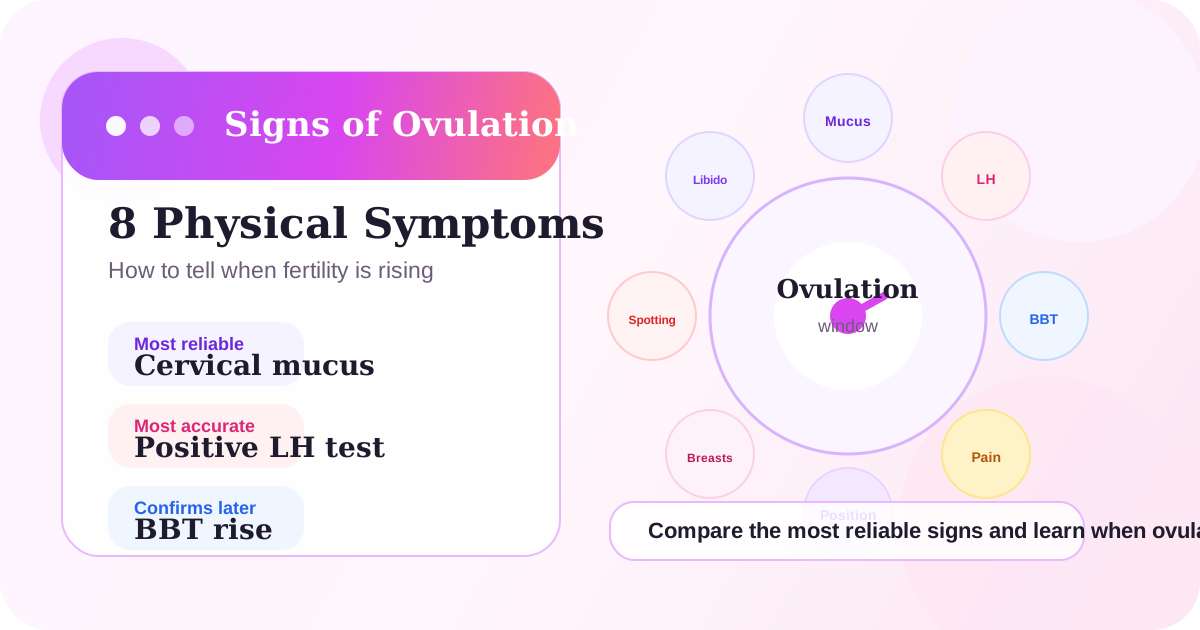
If you are trying to conceive, use body signals and testing rather than relying on calendar math alone. Our ovulation calculator is a useful estimate, and our signs of ovulation guide explains what to look for when cycle length varies.
Fertility Impact By Cause
| Stress | Mild, usually temporary | Lifestyle changes |
| Weight changes | Moderate | Weight stabilization |
| PCOS | Moderate to high | Ovulation induction |
| Thyroid disorder | Moderate | Thyroid medication |
| Excessive exercise | Mild to moderate | Reduce training load |
| Post-pill cycle return | Temporary | Time and follow-up |
| POI | High | HRT and ART options |
| Perimenopause | High | ART if pregnancy desired |
A practical approach is to track 3 to 6 months of cycle data, use LH tests if you are actively trying to conceive, and seek fertility evaluation after 12 months of trying or after 6 months if you are over 35. With an irregular cycle, earlier evaluation often saves time because it clarifies whether the issue is timing, ovulation, or something structural.
It also helps to know the limits of home fertility tools. LH strips are useful, but they can be confusing in PCOS because LH may run high at baseline. Basal body temperature can confirm that ovulation probably happened, but only after the fertile window has mostly passed. For many couples, the fastest route is combining home tracking with an early clinician workup when cycles are consistently irregular rather than spending months waiting for a perfect pattern to emerge.
How to Track Irregular Periods
People with irregular periods sometimes stop tracking because the pattern feels too messy. In practice, that is exactly when tracking becomes most useful. An irregular cycle is harder to understand from memory than a regular one because the details blur quickly.
Track the first day of bleeding, the last day, how heavy the flow is, and anything that might explain the month-to-month shift. Stress, travel, illness, medication changes, and exercise spikes are especially useful notes. The goal is to create a timeline that a clinician can read in minutes instead of trying to reconstruct it from memory.
What To Track For Irregular Cycles
Essential
First day of each period, last day of bleeding, and flow intensity each day.
Helpful for diagnosis
Stress level, travel, illness, exercise changes, weight changes, acne, hair changes, and new medications.
Best timeframe
At least 3 months. Six months gives a much clearer picture for persistent irregular periods.
A period calculator is helpful for forecasting. A period tracker is what helps you recognize patterns and communicate them clearly to a doctor. Start with the tracker first, then use prediction tools as a planning layer on top.
If your cycle is highly inconsistent, photos of heavy bleeding, clot size, or positive ovulation tests can also add useful context during a medical review.
Good tracking also makes appointments more efficient. Doctors are often looking for clusters rather than single symptoms: irregular periods plus acne may point them toward androgen testing, while irregular periods plus fatigue and cold sensitivity may push thyroid testing higher up the list. The clearer your log, the less likely it is that an important clue gets lost in a rushed visit.
Solutions: How to Regulate Your Period
There is no single answer to how to regulate periods because the right solution depends on the cause. In some cases the answer is lifestyle change. In others it is medication, hormone treatment, or a structural procedure. The key is to match treatment to mechanism.
Even a long-standing irregular menstrual cycle can often become more manageable once the underlying mechanism is identified and treated directly.
Evidence-based lifestyle interventions work best when the irregular period is being driven by stress, sleep disruption, under-fueling, weight instability, or excessive exercise. They are not a replacement for medical evaluation, but they often make treatment work better and sometimes solve the problem when the trigger is temporary.
Evidence-Based Lifestyle Approaches
Stress management
Regular mindfulness, therapy, breathing work, or yoga can reduce cortisol load and support ovulation.
Healthy body weight
Gradual and sustainable weight change is safer than crash diets or rapid bulking.
Moderate exercise
About 150 minutes per week of moderate movement is supportive for most people.
Consistent sleep
Aim for 7 to 9 hours. Shift work and irregular sleep timing can disrupt hormonal cues.
Balanced nutrition
Adequate calories, protein, iron, zinc, and vitamin D matter for hormone function.
Limit alcohol and high caffeine intake
These do not cause every irregular cycle, but they can add noise when hormones are already unstable.
Treatment depends on the cause. The goal might be regulating bleeding, protecting the uterine lining, restoring ovulation, improving fertility, or treating a broader endocrine condition such as thyroid disease. The same symptom can have completely different treatment pathways.
Medical Treatment Options By Cause
PCOS
Combined oral contraceptive pills, metformin for insulin resistance, and ovulation induction medicines such as letrozole when trying to conceive.
Thyroid disorders
Levothyroxine for hypothyroidism or antithyroid therapy for hyperthyroidism.
Fibroids or polyps
Hormonal IUDs, GnRH-based therapy, hysteroscopic polyp removal, or myomectomy depending on symptoms and fertility goals.
Hyperprolactinemia
Dopamine agonists such as cabergoline or bromocriptine when indicated.
POI
Hormone replacement therapy is usually recommended to protect bone and cardiovascular health until the natural age of menopause.
A few complementary approaches have some evidence behind them, especially for PCOS-related irregular periods, but the evidence is not strong enough to treat them as stand-alone solutions. Inositol has the best support for PCOS in some populations. Vitamin D repletion may help when deficiency is present. Acupuncture is being studied, but the evidence remains mixed.
Note On Natural Approaches
Natural remedies should complement, not replace, medical evaluation. If an underlying condition such as PCOS or thyroid disease is causing your irregular periods, lifestyle changes or supplements alone are unlikely to be enough. Speak with a healthcare provider before starting supplements.
When to See a Doctor
The hardest part of managing an irregular period is often deciding whether to keep watching or book the appointment. A useful rule is this: if the pattern is persistent, severe, or accompanied by other hormonal or bleeding symptoms, it is time for evaluation rather than more guessing.
When To See A Doctor
See a doctor soon (within 1 to 2 months)
- Irregular periods for 3 or more consecutive cycles
- Cycles consistently shorter than 21 days or longer than 35 days
- Trying to conceive with an irregular cycle
- Irregular bleeding plus acne, scalp hair thinning, or excess facial hair
- Irregular bleeding plus unexplained weight change, fatigue, or temperature sensitivity
See a doctor promptly (within weeks)
- No period for 3 or more months if you are not pregnant
- Sudden very heavy bleeding or passing large clots
- Severe pelvic pain with irregular cycles
- Symptoms of anemia such as dizziness, shortness of breath, or extreme fatigue
Seek urgent care
- Heavy bleeding that will not slow down
- Severe pelvic pain with fever or fainting
- A positive pregnancy test with heavy bleeding or one-sided pain
What To Bring To Your Appointment
- 3 to 6 months of cycle tracking data including dates, duration, flow, and symptoms.
- A full medication and supplement list.
- Recent weight changes and exercise routine.
- Major stressors, travel, postpartum status, or diet changes.
- Family history of PCOS, thyroid disease, or early menopause.
- If you use the period tracker, bring or export your recent log.
In many cases the initial workup is straightforward. Depending on symptoms, it may include a pregnancy test, complete blood count, TSH, prolactin, androgen labs, iron studies, or pelvic ultrasound. Knowing that ahead of time can make the visit feel less intimidating. You are not expected to arrive with the diagnosis. Your job is to bring the pattern. The clinician's job is to decide which tests match that pattern.
Full Medical Disclaimer
This article is for educational purposes only. The conditions discussed, including PCOS, thyroid disorders, and premature ovarian insufficiency, require professional medical diagnosis. Do not use this article to self-diagnose or delay medical care. If you are concerned about your menstrual health, please consult a qualified healthcare provider promptly.
Frequently Asked Questions
These answers are written for the questions people most often ask after noticing an irregular period and trying to figure out whether it is a normal fluctuation, a fertility issue, or a medical problem worth evaluating.
For broader reproductive health education, you can also review WHO reproductive health resources.