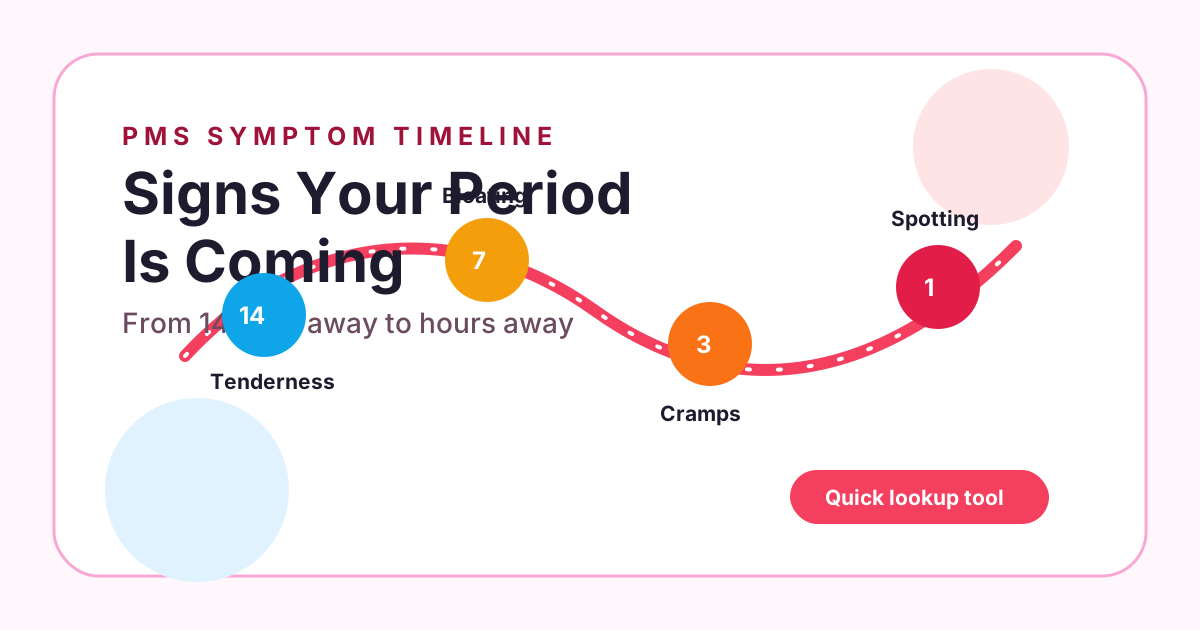
Your body has been sending you signals for days. The question is not whether the signs are there. It is knowing how to read them.
Most articles give you a list of PMS symptoms. This one goes further: it tells you when each symptom typically appears, how long it tends to last, and what it may mean about how close your period is.
Because "I feel bloated" is useful. "I feel bloated, which usually means my period is 2-3 days away" is actually actionable. If you are searching for signs your period is coming, the timeline matters as much as the symptom.
The Hormonal Story Behind Every Symptom
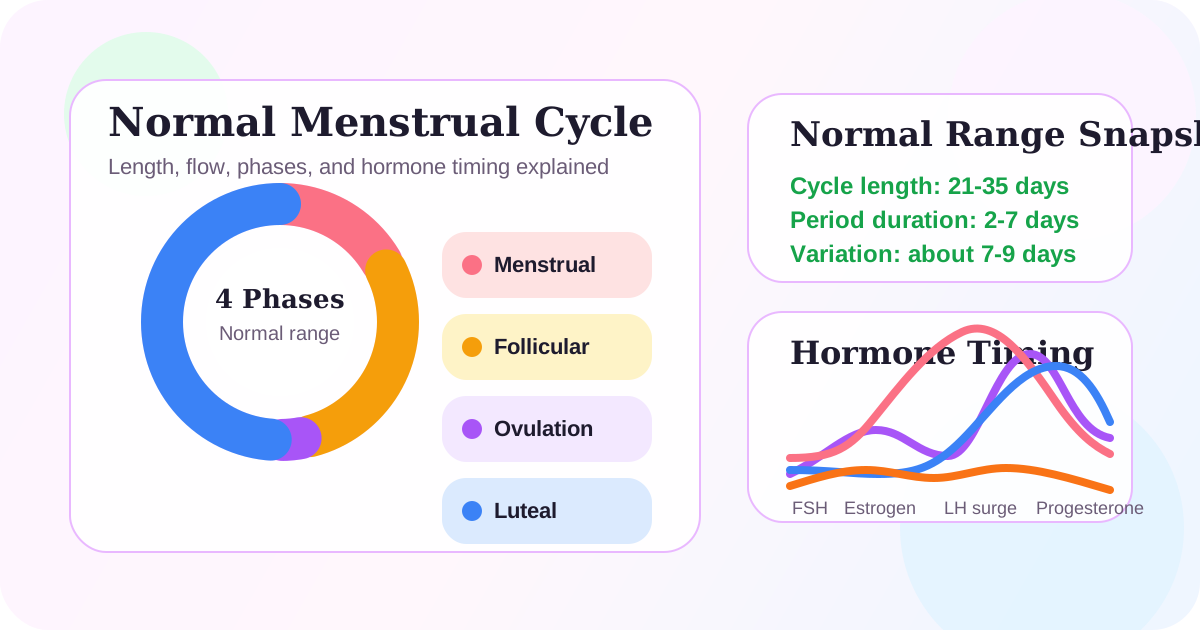
Your symptoms are not random. They follow your hormones. In the first half of the cycle, estrogen rises and many people feel more energetic, clear-headed, and social. Around ovulation, luteinizing hormone surges, estrogen peaks, and some people notice a mood lift, more cervical mucus, increased libido, or a one-sided twinge called mittelschmerz.
After ovulation, progesterone rises. That early luteal phase can feel steady and calm, but it can also feel slower: a little more tired, a little more breast tenderness, a little less like your highest-energy self. Then the late luteal phase arrives. Estrogen and progesterone begin dropping, and that drop triggers the PMS symptoms many people recognize.
Serotonin can fall with estrogen, which helps explain mood changes and cravings. Prostaglandins build as the uterine lining prepares to shed, which helps explain pre-period cramps, lower back pain, and bowel changes. Progesterone's effect on fluid and digestion helps explain bloating and constipation.
The validating part
Every symptom you feel in the week before your period is a direct response to falling hormones, prostaglandins, and nervous-system sensitivity. It is not weakness, not "being emotional," and not bad luck. Your body is doing a very specific job.
Hormonal Timeline
Period
Day 1
Period starts
Prostaglandins peak, cramps may be strongest, and estrogen starts rising again.
Follicular
Day 1-13
Follicular phase
Estrogen rises, so many people feel clearer, more social, and more energetic.
Ovulation
Day 14
Ovulation
LH surges, estrogen peaks, libido may lift, and one-sided ovulation pain can happen.
Early luteal
Day 15-18
Early luteal starts
Progesterone rises, which can feel calming for some and sleepy for others.
Early luteal
Day 19-21
Tenderness can begin
Breast tissue can retain fluid as progesterone stays high.
Late luteal
Day 22-24
PMS territory
Estrogen and progesterone begin to drop; serotonin may fall with estrogen.
Late luteal
Day 25-26
Stronger PMS signals
Bloating, cravings, fatigue, and mood changes often become more noticeable.
Pre-period
Day 27-28
Period is close
Hormones are low, prostaglandins build, spotting or cramps may begin.
Period Coming Soon Timeline
The Period Countdown Timeline: what each symptom tells you
Use this timeline to read your body backwards: find the symptom you are experiencing right now, then look at how many days away your period likely is. These are population averages. Your personal pattern may shift by 1-3 days.
14-10 days before period
Early signs can be real, but they are not always precise. Think of them as your first clue, not your final answer.
Breast tenderness begins
ModerateWhat's happening: Rising progesterone can make breast tissue retain fluid and feel swollen.
What it feels like: Fullness, sensitivity, or sharp pain when touched.
Mild mood shift
LowWhat's happening: Progesterone has calming effects, but some people feel more anxious or irritable as it rises.
What it feels like: Less patience than your good week; small things land harder.
Acne begins
ModerateWhat's happening: Progesterone can stimulate sebum, while androgens are relatively more noticeable after ovulation.
What it feels like: Breakouts around the chin, jawline, chest, or back.
7-5 days before period
This is the classic period coming soon symptom zone: bloating, cravings, fatigue, and headaches often become easier to connect.
Bloating intensifies
HighWhat's happening: Progesterone slows gut motility, and the estrogen drop can increase water retention.
What it feels like: Clothes feel tighter; your abdomen feels full even without eating much.
Food cravings
HighWhat's happening: Serotonin drops as estrogen falls. Carbohydrates can temporarily support serotonin and dopamine.
What it feels like: Chocolate, bread, pasta, salty snacks, or one very specific food that suddenly feels non-negotiable.
Fatigue
ModerateWhat's happening: Progesterone has sedating properties, and lighter sleep can compound the tiredness.
What it feels like: Heavier-than-usual tiredness, foggy focus, and wanting more sleep.
Headaches
HighWhat's happening: Estrogen withdrawal can affect serotonin and blood-vessel sensitivity, especially in migraine-prone people.
What it feels like: A dull tension-type headache or a familiar menstrual migraine pattern.
3-2 days before period
These are strong signals. If you are wondering how to know your period is coming, this bracket is where your body gets much more specific.
Cramping without bleeding
HighWhat's happening: Prostaglandins are building in the uterine lining before it sheds, so contractions can begin early.
What it feels like: Dull lower-abdominal or lower-back aches that feel like period cramps without full flow.
Lower back pain
HighWhat's happening: Pelvic pain can refer into the lower back and thighs through shared nerve pathways.
What it feels like: A dull, achy low back that may spread into the upper thighs.
Bowel changes
HighWhat's happening: Prostaglandins affect intestinal smooth muscle as well as uterine muscle.
What it feels like: Looser stools, urgency, constipation, or an annoying switch between both.
Mood at its lowest point
HighWhat's happening: Estrogen and progesterone are low, serotonin may be low, and GABA receptor sensitivity can shift.
What it feels like: Tearfulness, irritability, or feeling overwhelmed by things that normally would not take you down.
1 day before / day of period
These are the most useful signs period is 1 day away. Full flow may start within hours to two days.
Spotting
HighWhat's happening: The endometrial lining may begin to shed unevenly before full bleeding starts.
What it feels like: Light pink, brown, or rust-colored discharge that is not enough for a pad.
Cervical mucus dries up
HighWhat's happening: Progesterone makes mucus thicker after ovulation, then discharge often decreases right before bleeding.
What it feels like: Dryness or very minimal discharge after several days of thicker mucus.
Intense cramps begin
Very HighWhat's happening: Prostaglandins peak as the lining starts to shed and uterine contractions intensify.
What it feels like: Stronger waves of cramping that may radiate to the lower back and thighs.
What I'm Feeling Right Now
"What I'm Feeling Right Now" — Quick Lookup
Pick the pattern that sounds closest to your current body signals. Nothing is stored; this is a client-side guide based on typical PMS symptoms timelines.
Estimated countdown
Period likely 1-3 days away
Prostaglandins may already be rising in the uterine lining before full bleeding starts.
Based on population averages. Your personal pattern may vary by 1-3 days, especially with irregular cycles.
The Symptoms That Are NOT Normal (When to Pay Attention)
Most PMS symptoms, even strong ones, are variations of a hormonal process. But "common" and "something you have to live with" are not the same thing. Pay attention when symptoms change your life, worsen over time, or do not resolve after your period begins.
See a doctor if
- Symptoms are severe enough to affect work, school, relationships, caregiving, or basic daily life. This may be PMDD rather than regular PMS.
- You have thoughts of self-harm in the week before your period. That deserves prompt support and medical care.
- Spotting happens between periods repeatedly, not only right before full flow.
- Cramps are getting worse over time, especially if they do not respond to usual care.
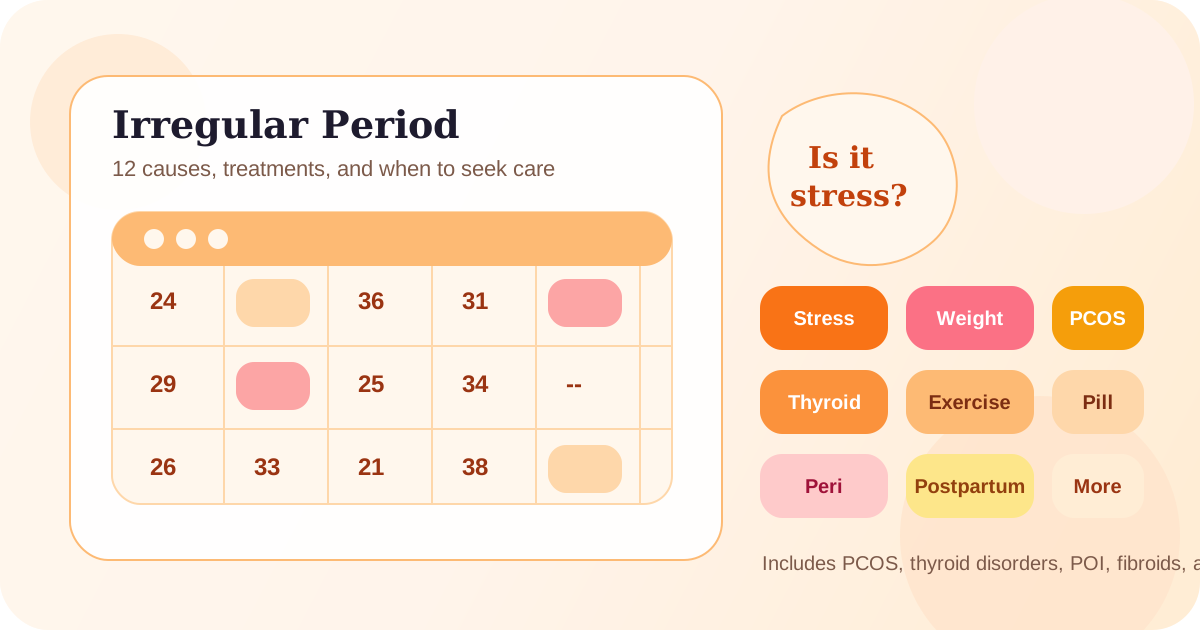
- Your usual premenstrual symptoms suddenly disappear for several cycles, especially if your cycles also become irregular.
- Symptoms continue more than about 4 days after bleeding starts.
Progressively worsening cramps can happen with conditions such as endometriosis, adenomyosis, or fibroids. Persistent spotting can have several causes, from ovulation spotting to polyps, fibroids, infection, cervical changes, or medication effects. You do not need to diagnose yourself before asking for help.
PMS vs PMDD — The Line That Matters
This distinction is important and underdiagnosed. PMS is uncomfortable but manageable. PMDD is disabling, biologically grounded, and treatable.
PMS
Uncomfortable but workable
- Affects many menstruating people.
- Symptoms are frustrating, sore, tiring, or emotional, but daily function is mostly intact.
- Usually resolves within a few days after bleeding begins.
PMDD
Severe, real, treatable
- Often estimated around 3-8% of menstruating women.
- Depression, rage, anxiety, hopelessness, or relationship disruption can be prominent.
- Work, school, caregiving, or daily life is significantly impaired.
- Treatments can include SSRIs, combined oral contraceptives, and specialist options such as GnRH agonists for severe cases.
PMS symptoms are biochemical, but support still helps
The goal is not to erase every pre-period signal. Some cyclic change is normal. The goal is to reduce the symptoms that steal your week and to notice the ones that are acting like a countdown.
For bloating, try lowering sodium a few days before your expected period and using light movement instead of total rest. For cramps, timing matters: NSAIDs work by blocking prostaglandin production, so they are often most effective when started before pain is already intense, if they are safe for you. Heat therapy can also be surprisingly effective for mild to moderate cramps.
For mood symptoms, aerobic exercise and calcium have stronger evidence than most people expect. Alcohol can worsen anxiety and sleep quality, so cutting back in the luteal phase may matter more than it sounds. For fatigue, protect sleep and consider whether heavy bleeding might be contributing to low iron.
How to Make Your Pre-Period Week More Bearable
| Symptom | Intervention | Evidence level |
|---|---|---|
| Bloating | Reduce sodium 3-5 days before your expected period; consider magnesium glycinate if appropriate; add light walking. | Moderate |
| Cramps | Ask your clinician whether NSAIDs can be started 1-2 days before cramps usually begin; use heat therapy. | Strong RCT evidence |
| Mood | Aerobic exercise, calcium around 1,200 mg/day when appropriate, and reducing alcohol are often more useful than they sound. | Strong RCT evidence |
| Fatigue | Prioritize sleep during the luteal phase; if bleeding is heavy, ask about ferritin testing. | Moderate |
| Headaches | Hydration, magnesium when appropriate, and a migraine-specific plan if headaches are severe or predictable. | Moderate |
Magnesium and calcium are often overlooked. Check with a clinician or pharmacist first if you are pregnant, trying to conceive, on medication, or have kidney, heart, migraine, bleeding, or stomach-ulcer concerns.
How to Build Your Personal Symptom Timeline
The timeline above is based on population averages. Your personal pattern is more useful, and it usually only takes 2-3 cycles to see it. Track each symptom as it appears, the day it appears counting back from your period, its severity on a simple 1-3 scale, and when it resolves.
After three cycles, you will know which symptoms you reliably get, which ones are noise, and which signals have real countdown value for you. You might learn that lower back pain always means your period is two days away, or that cravings show up a full week before bleeding but do not predict the exact date.
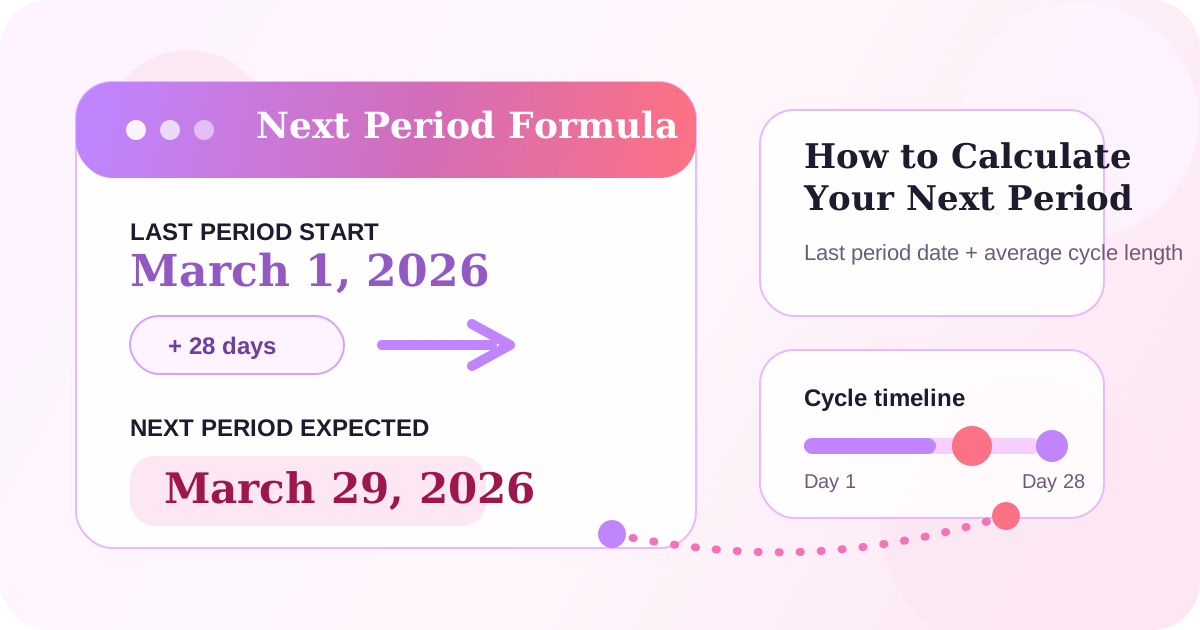
This personal timeline is more accurate than any app prediction because it is based on your body, not only a population average. Use the period calculator for the date estimate, then use your symptom pattern to sanity-check whether that estimate feels close.
Next step
You know the signs. Now know the date.