Your body sends signs of ovulation every cycle, but those signs are not all equally obvious or equally reliable. Some appear as visible changes in cervical mucus. Others show up only if you test for an LH surge or take your basal body temperature every morning. Learning which ovulation symptoms matter most can make fertility timing much less confusing.
For people trying to conceive, recognizing signs of ovulation helps you focus on the short 6-day fertile window rather than guessing across the whole month. For people trying to understand their hormonal pattern, ovulation signs and symptoms also show whether the cycle seems to be moving from estrogen-dominant fertility to the progesterone-led luteal phase in a way that makes biologic sense.
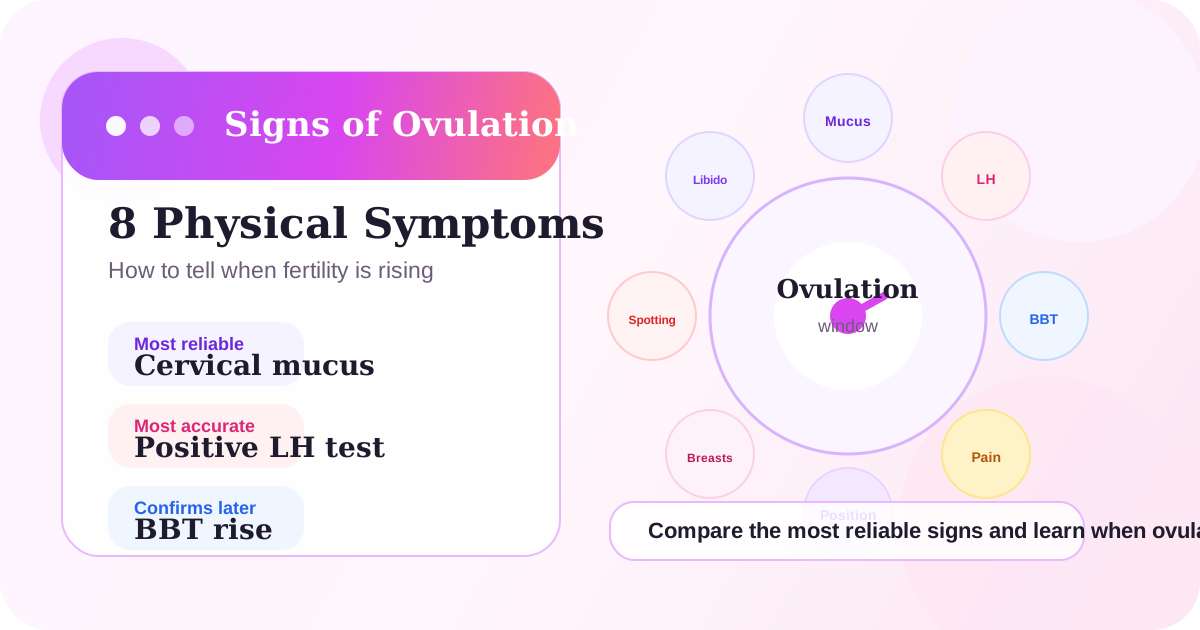
This complete guide walks through the 8 most-discussed signs of ovulation in women, from the most reliable physical sign, cervical mucus, to more variable clues such as light spotting and increased sex drive. Each section explains what the sign looks like, how useful it is, and how it fits before, during, or after ovulation. → Jump to the reliability comparison chart → Use our free Ovulation Calculator
Quick Summary: The 8 Signs of Ovulation
Not all ovulation signs are created equal. Some, like egg white cervical mucus and a positive LH test, are strong predictive signals that ovulation is close. Others, like breast tenderness or increased libido, are real ovulation symptoms for some people but are too nonspecific to trust on their own.
The 8 Signs Of Ovulation At A Glance
| # | Sign | Timing | Reliability |
|---|---|---|---|
| 1 | Egg white cervical mucus | 1-5 days before | ★★★★★ |
| 2 | Positive LH test | 24-36h before | ★★★★★ |
| 3 | BBT rise | Day after | ★★★★☆ |
| 4 | Mittelschmerz (pain) | During or just after | ★★★☆☆ |
| 5 | Cervical position change | 1-3 days before | ★★★☆☆ |
| 6 | Breast tenderness | Around ovulation | ★★☆☆☆ |
| 7 | Light spotting | Around ovulation | ★★☆☆☆ |
| 8 | Increased sex drive | 1-3 days before | ★★☆☆☆ |
Five stars means the sign is highly useful when recognized correctly. Two stars means the sign may still be real but is much more variable and less diagnostic by itself.
Sign #1 - Cervical Mucus Changes (Most Reliable Physical Sign)
Sign #1
Cervical Mucus Changes
Reliability
Timing
Begins 1 to 5 days before ovulation
Who notices
Most people can learn to notice it with daily observation
Predicts
Yes
Confirms
No
If you want one physical sign of ovulation that is free, real time, and biologically meaningful, start with cervical mucus. Changes in cervical mucus happen because rising estrogen transforms the cervix from a barrier into a sperm-friendly gateway. That is why cervical mucus ovulation tracking remains central to fertility awareness methods.
The reason this sign matters so much is that it tells you more than timing alone. Fertile cervical mucus does not just appear around ovulation; it actually improves sperm survival and transport. When people ask how to know if you are ovulating, the answer often begins with recognizing the shift to wetter, clearer, more slippery secretions.
What Does Ovulation Discharge Look Like?
Egg White Cervical Mucus (EWCM)
Appearance: clear or slightly cloudy.
Texture: very slippery, like raw egg white.
Stretch: usually stretches 2 to 5 cm between fingers before breaking.
Amount: often more noticeable than earlier cycle mucus.
Sensation: a wet or slippery feeling at the vaginal opening.
When people search for ovulation discharge, they are usually asking about this stage: egg white cervical mucus, often shortened to EWCM. It is the classic fertile secretion because it is clear, slippery, and stretchable rather than thick or crumbly. Many people notice not only the appearance but also the feeling of increased moisture when walking or wiping.
Egg white cervical mucus matters because it is not the same as general discharge. Ovulation discharge color and texture usually shift toward clear, glossy, and elastic, whereas ordinary nonfertile discharge is more likely to feel sticky, dry, pasty, or lotion-like. If the mucus stretches between your fingers without snapping immediately, you are usually much closer to ovulation than when it breaks apart.
This is also why signs of ovulation in women are often easiest to spot through mucus before any other symptom appears. EWCM commonly shows up 1 to 3 days before ovulation, which makes it a better planning sign than a post-ovulation temperature rise.
The Cervical Mucus Progression Through Your Cycle
Cervical mucus changes because hormones change. Early in the cycle, when estrogen is still relatively low, mucus is often minimal, dry, or sticky. As estrogen climbs toward ovulation, cervical mucus becomes creamier and then transitions into the slippery fertile pattern that helps sperm move through the cervix.
Cervical Mucus Through Your Cycle
| Phase | Days* | Appearance | Fertility |
|---|---|---|---|
| Menstruation | 1-5 | Bleeding | N/A |
| Dry phase | 6-9 | Little to none, dry feeling | Not fertile |
| Sticky phase | 10-12 | White, sticky, crumbly | Low fertility |
| Creamy phase | 12-13 | White or yellow, lotion-like | Some fertility |
| Egg white (EWCM) | 13-15 | Clear, slippery, stretchy | Peak fertility |
| Post-ovulation | 16-28 | Drier, thicker, or sticky again | Lower fertility |
* Example timeline for a 28-day cycle. Your own cervical mucus pattern may shift earlier or later.
After ovulation, progesterone quickly changes the picture. Cervical mucus usually becomes thicker, less abundant, and less sperm-friendly. That rapid shift is one reason a mucus change can also help you infer that ovulation is over, even though cervical mucus alone does not confirm the exact moment the egg was released.
How to Check Your Cervical Mucus
How To Check Cervical Mucus
Method 1: wipe with plain white toilet paper before urinating and look at the color, texture, and quantity.
Method 2: use clean fingers, collect a sample from just inside the vagina, then slowly pull thumb and finger apart to test stretch.
Method 3: notice moisture patterns on underwear and the feeling at the vaginal opening through the day.
Best practice: check around the same time daily and avoid judging mucus right after sex, swimming, or lubricant use.
Most people need at least a cycle or two to feel confident reading cervical mucus. Medications such as antihistamines can dry secretions out. Vaginal infection, recent intercourse, or prior cervical procedures can also change what you see. That is why cervical mucus works best as a repeated observation, not a single one-off check.
Sign #2 - Positive LH Test (Most Accurate Predictive Sign)
Sign #2
Positive LH Test
Reliability
Timing
LH surge usually appears about 24 to 36 hours before ovulation
Who notices
Anyone who tests consistently
Predicts
Yes
Confirms
No
A positive LH test is the strongest at-home predictive sign that ovulation is close. The main advantage over calendar timing is that the strip is reading current biology rather than a historical average. If you want to know how do you know when you are ovulating this cycle, LH testing is one of the fastest answers.
How LH Tests Work
How OPK Strips Work
1. The pituitary gland releases a surge of luteinizing hormone (LH) shortly before ovulation.
2. LH reaches the urine within hours.
3. The strip uses antibodies that react to LH and create the visible test line.
4. When the test line is as dark as or darker than the control line, the LH surge has been detected.
ASRM notes that urinary LH methods have been validated for detecting the midcycle surge, but the surge is not identical to confirmed ovulation. In other words, a positive strip is a strong signal that ovulation is near, yet rare situations such as some PCOS patterns can create misleading results if interpreted without context.
How to Use an Ovulation Test Strip
How To Use OPK Strips
When to start: begin about 3 to 4 days before predicted ovulation. You can estimate that date with our ovulation calculator.
Best time: late morning through evening is usually better than first-morning urine for many brands.
How often: once daily until the line darkens, then twice daily if you tend to miss short surges.
Before testing: avoid overhydrating for a couple of hours before the test so urine is not too diluted.
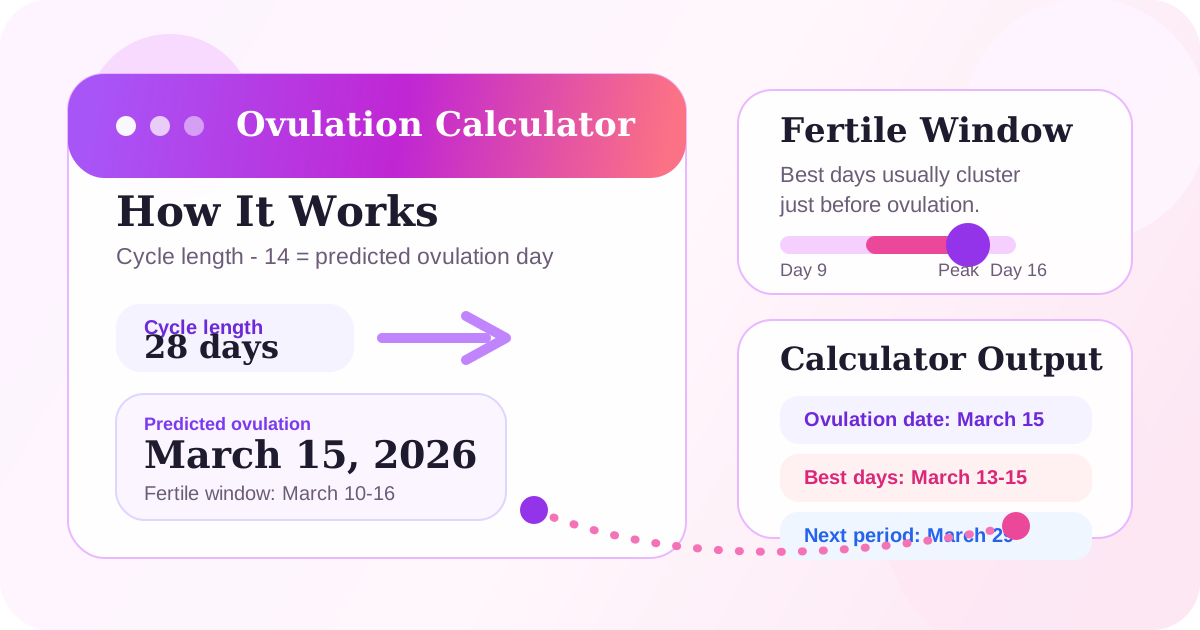
If you want the calendar logic behind the testing schedule, read our ovulation calculator how it works guide. That article explains why cycle length minus 14 gives a planning estimate, while LH strips tell you whether the current cycle is actually approaching ovulation now.
How to Read OPK Results
Reading Your OPK Results
Negative - continue testing
Test line is lighter than the control line.
Positive - ovulation likely in 24 to 36 hours
Test line is as dark as or darker than the control line.
Invalid - retest with a new strip
No control line appeared, so the strip cannot be interpreted.
A positive result means the test line is as dark as or darker than the control line. A faint line is not a true positive. This detail matters because many people mistake a gradually darkening strip for an LH surge, then think they missed ovulation when the real peak comes later.
PCOS Note
If you have PCOS or chronically high LH, OPKs can be harder to interpret because multiple surges or persistently darker lines may occur. In that situation, cervical mucus, serial testing, and a clinician's guidance are more useful than relying on a single strip.
Sign #3 - Basal Body Temperature Rise (BBT)
Sign #3
Basal Body Temperature Rise
Reliability
Timing
Usually rises the day after ovulation
Who notices
Anyone who records daily temperatures carefully
Predicts
No
Confirms
Yes
Basal body temperature is one of the most discussed ovulation symptoms because it gives a concrete chart. However, it is important to understand what BBT can and cannot do. Basal body temperature ovulation tracking works well for confirming that ovulation likely already happened. It is weaker if your goal is to predict the fertile window before it closes.
How to Track BBT for Ovulation
BBT Tracking Requirements
Use a basal thermometer that reads in small increments, ideally to one tenth of a degree.
Take the temperature immediately after waking, before sitting up, talking, eating, or drinking.
Measure at about the same time each day and log it immediately in a notebook or your period tracker.
Expect at least 2 to 3 cycles of practice before the pattern becomes easier to read.
Sleep disruption, alcohol, illness, shift work, and travel can all blur the usefulness of BBT. That is why basal body temperature is most helpful for learning your pattern over time rather than making urgent day-of decisions.
Reading Your BBT Chart
The basic idea is simple: temperatures are lower before ovulation and higher afterward because progesterone has a warming effect. A single higher number is not enough. You are looking for a sustained shift, often 3 consecutive days above the previous lower range. Many people also draw a cover line to make the shift easier to see.
Sample BBT Chart
Basal body temperature rise after ovulation
Once that rise has held for several days, you can be more confident that ovulation occurred shortly before the shift. In practice, the BBT chart is excellent for confirming the end of the fertile window, not for predicting it far enough ahead to plan intercourse the first time you see the rise.
BBT Limitations: What It Can and Cannot Tell You
BBT: What It Can And Cannot Do
Can Do
- +Confirm that ovulation likely occurred after a sustained temperature rise.
- +Help identify your usual ovulation pattern across several cycles.
- +Show whether your luteal phase is typically short or stable.
- +Suggest pregnancy only if temperatures stay elevated well beyond the usual luteal phase.
Cannot Do
- -Predict ovulation before it happens in the current cycle.
- -Guarantee that a one-day temperature bump was ovulation without a sustained shift.
- -Work well when sleep, illness, alcohol, or travel are disrupting the readings.
- -Replace LH testing or cervical mucus observation when you need same-cycle timing.
Sign #4 - Mittelschmerz (Ovulation Pain)
Sign #4
Mittelschmerz (Ovulation Pain)
Reliability
Timing
During or just after ovulation
Who notices
Only some people, often about 1 in 5
Predicts
No
Confirms
No
Mittelschmerz is the German term for ovulation pain. It is one of the best-known physical signs of ovulation, but it is also one of the least universal. Some people feel it every month, others occasionally, and many never notice it at all.
What Does Ovulation Pain Feel Like?
Mittelschmerz Characteristics
Location: one side of the lower abdomen or pelvis.
Type: dull ache, sharp twinge, pressure, or cramping.
Duration: from minutes to a day or two.
Timing: mid-cycle, around the predicted ovulation day.
Sometimes accompanied by light spotting or a feeling of heaviness.
Mittelschmerz ovulation pain is thought to reflect follicle stretching or mild irritation from fluid and blood released at ovulation. It can feel like menstrual cramping, but it is usually more localized and much shorter-lived than period pain.
Which Side Does Ovulation Pain Occur?
The pain usually appears on the side of the ovary that is releasing the egg. That is why some people notice left-sided pain one month and right-sided pain the next, while others feel it repeatedly on the same side for several cycles. The side can be informative, but it is not precise enough to use alone as proof that ovulation happened.
Ovulation Pain vs. Other Causes of Pelvic Pain
When To See A Doctor
Seek medical review if pain is severe, disabling, or lasts longer than a couple of days.
Fever, vomiting, worsening pain, faintness, or heavy bleeding are not typical Mittelschmerz features.
Other causes of pelvic pain can include ovarian cyst problems, appendicitis, endometriosis, PID, or ectopic pregnancy.
A mild, brief, one-sided ache in the middle of the cycle can fit Mittelschmerz. Persistent or intense pain should not be dismissed as a normal sign of ovulation. That is especially true if the pattern changes suddenly or comes with systemic symptoms.
Sign #5 - Changes in Cervical Position
Sign #5
Changes in Cervical Position
Reliability
Timing
Often 1 to 3 days before ovulation
Who notices
People who check regularly over multiple cycles
Predicts
Yes
Confirms
No
Cervical position changes receive less attention than cervical mucus, but they follow the same fertility biology. Around the fertile window, the cervix becomes softer, higher, more open, and wetter. Many fertility awareness teachers summarize that pattern as SHOW: soft, high, open, wet.
Cervical Changes Through Your Cycle
| Feature | Non-fertile phase | Fertile phase |
|---|---|---|
| Position | Low and easy to reach | High and harder to reach |
| Texture | Firm, like the tip of your nose | Soft, more like your lips |
| Opening | More closed and narrow | Slightly open or wider |
| Moisture | Dry or sticky | Wet and slippery |
SHOW: Soft, High, Open, Wet = fertile.
To check it, wash your hands, insert one or two fingers, and compare how the cervix feels at the same point each day. This takes practice because your anatomy and your baseline position are individual. For that reason, cervical position is better used as a supporting sign than as a standalone diagnosis of ovulation.
Sign #6 - Breast Tenderness
Sign #6
Breast Tenderness
Reliability
Timing
Around ovulation or later in the luteal phase
Who notices
Some people, but not consistently
Predicts
No
Confirms
No
Breast tenderness can occur around ovulation because hormone levels are shifting rapidly, but it is not one of the most dependable physical signs of ovulation. Estrogen peaks near ovulation and progesterone rises after it, so breast sensitivity can show up in either period depending on your body.
The main limitation is specificity. The same tenderness can appear with PMS, with medication changes, or in early pregnancy if your period is delayed. That means breast tenderness can support the rest of your pattern but should not be used alone to decide whether ovulation is happening.
Sign #7 - Light Spotting or Ovulation Bleeding
Sign #7
Light Spotting or Ovulation Bleeding
Reliability
Timing
Around ovulation day
Who notices
A minority of ovulating people
Predicts
No
Confirms
No
Ovulation Spotting Characteristics
Amount: very light, not like a true period.
Color: pink, light red, or brown.
Duration: from a few hours to about 1 or 2 days.
Timing: usually around mid-cycle.
Possible cause: a brief hormonal shift near ovulation.
Ovulation bleeding is much lighter and shorter than a menstrual period. If you notice it consistently at mid-cycle, it may become one of your personal signs of ovulation. Still, because spotting can also happen for many other reasons, it is a weak signal unless it repeats in a recognizable pattern alongside other ovulation symptoms.
Timing helps with the differential. Implantation bleeding, when it happens at all, occurs several days after ovulation rather than on the ovulation day itself. Heavy, prolonged, or unpredictable bleeding needs medical evaluation rather than self-diagnosis as ovulation spotting.
Sign #8 - Increased Sex Drive
Sign #8
Increased Sex Drive
Reliability
Timing
Often 1 to 3 days before ovulation
Who notices
Some people notice it strongly, others not at all
Predicts
No
Confirms
No
Increased libido is one of the more subtle ovulation signs and symptoms. Some people feel distinctly more interested in sex when estrogen and testosterone are peaking. Others notice no consistent shift because libido is also affected by stress, sleep, relationship context, and overall health.
This is best treated as a supporting sign. If a bump in sex drive happens at the same time as egg white cervical mucus or a darkening LH strip, it fits a coherent fertile pattern. On its own, it is too variable to answer how do you know when you are ovulating.
Secondary Signs Worth Noting
People sometimes notice other physical signs of ovulation that are not usually reliable enough to headline the cycle. These can still be useful when they appear in a pattern that matches stronger fertility signs.
Secondary Ovulation Signs
Heightened senses
Some people report stronger smell, taste, or general sensory sensitivity around ovulation.
Skin changes
A temporary glow or clearer skin can happen as estrogen peaks.
Bloating
Mild mid-cycle bloating can happen with hormonal fluid shifts.
Energy boost
Some people notice better energy, focus, or motivation when estrogen is high.
Abdominal heaviness
A feeling of fullness without sharp pain can accompany ovulation for some people.
Signs That Ovulation Is Over
Knowing when ovulation is over matters almost as much as knowing when it is approaching. The end of the fertile window changes mucus, temperature, and testing patterns quite quickly because progesterone has taken over from estrogen.
Signs That Ovulation Has Passed
- 1
Cervical mucus dries up or becomes thicker
Egg white cervical mucus usually ends abruptly once progesterone rises after ovulation.
- 2
BBT rises and stays elevated
A sustained shift for 3 or more days is one of the clearest signs that ovulation has already happened.
- 3
OPK turns negative again
The LH surge passes quickly, so the strip usually returns to negative after the peak.
- 4
Ovulation pain settles down
If you felt Mittelschmerz, it usually fades within hours or a day or two.
- 5
The fertile window closes
After the egg's short 12- to 24-hour lifespan ends, that cycle's conception window is essentially over.
How to Combine Multiple Signs for Better Accuracy
The best fertility tracking does not rely on only one sign. A calendar estimate tells you when to pay attention. Cervical mucus tells you fertility is rising in real time. LH testing narrows the window further. BBT then tells you whether ovulation likely already happened. Each method answers a slightly different question.
The Optimal Combination Approach
Level 1
Basic
Good for getting started with minimal cost and low tracking burden.
Methods
Ovulation calculator plus cervical mucus observation.
Good for
People who want a simple timing framework without a lot of gear.
Level 2
Intermediate
The strongest balance between practicality and actionable cycle timing.
Methods
Everything in Level 1, plus OPK strips.
Good for
People actively trying to conceive who want same-cycle confirmation of the LH surge.
Level 3
Advanced
A fuller fertility-awareness workflow for people who want more pattern detail.
Methods
Everything in Level 2, plus BBT tracking and cervical position checks.
Good for
People practicing a symptothermal approach or working through irregular cycles.
Research on symptothermal approaches suggests that combining cervical secretions with temperature tracking can be highly effective when the method is learned and used correctly.
A calculator is still a useful starting point because it tells you when to begin looking for signs of ovulation in the first place. Use the free ovulation calculator below to estimate the likely fertile window and decide when to start OPK testing.
Ovulation Calculator
Enter your last period start date and average cycle length to calculate your predicted ovulation date and fertile window. Results update automatically.
Your results
Ovulation date
June 30, 2026
Fertile window
Jun 25, 2026 - Jul 1, 2026
Best days
Jun 28 - Jun 30, 2026
Next period
July 14, 2026
This is a planning estimate based on your cycle history, not hormone detection.
See Full Calendar & Start OPK Testing ScheduleSigns of Ovulation With Irregular Cycles
If your cycles are irregular, a calendar estimate alone becomes much less useful because cycle length no longer predicts ovulation consistently. That means signs of ovulation without a predictable period matter even more. In irregular cycles, real-time body signals usually outrank math-based predictions.
Tracking Ovulation With Irregular Cycles
Most important: watch daily for the shift into egg white cervical mucus because it gives real-time information regardless of cycle length.
Most accurate at home: use OPK strips across a wider window, sometimes starting much earlier than a calendar estimate would suggest.
Best confirmation: chart BBT across several cycles to see whether there is a repeating post-ovulation rise.
What to avoid: relying on calendar timing alone if your cycle variation is large.
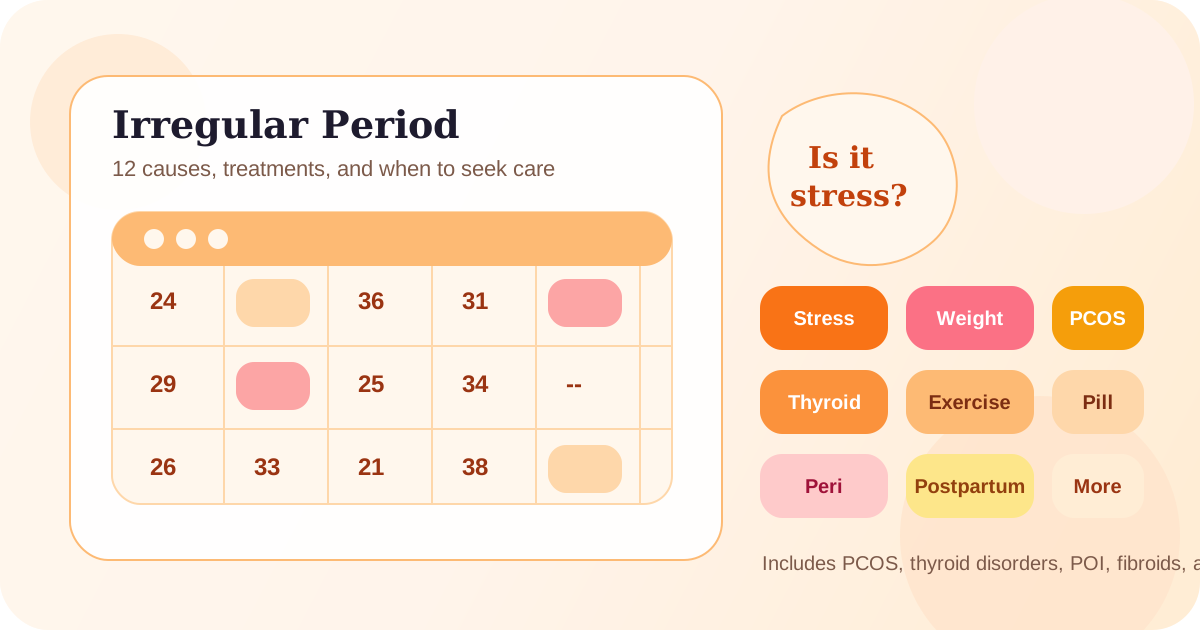
If irregular timing is a recurring issue, read our full guide to irregular period causes and solutions. The reason you are irregular can change how much faith to place in physical signs, LH testing, or calendar methods.
When You May Not Be Ovulating (Anovulation)
Some people searching for signs of ovulation are actually worried about the absence of those signs. No single symptom can diagnose anovulation, but patterns can raise suspicion. Cycles that are very long, very short, or extremely unpredictable deserve more attention than a single quiet month.
Signs You May Not Be Ovulating
No egg white cervical mucus across several cycles.
No clear BBT shift on charts that were taken consistently.
Repeatedly negative OPKs despite regular testing across the expected window.
Cycles that are consistently longer than about 35 days, shorter than about 21 days, or absent altogether.
Persistent irregular bleeding patterns rather than a clearer ovulatory rhythm.
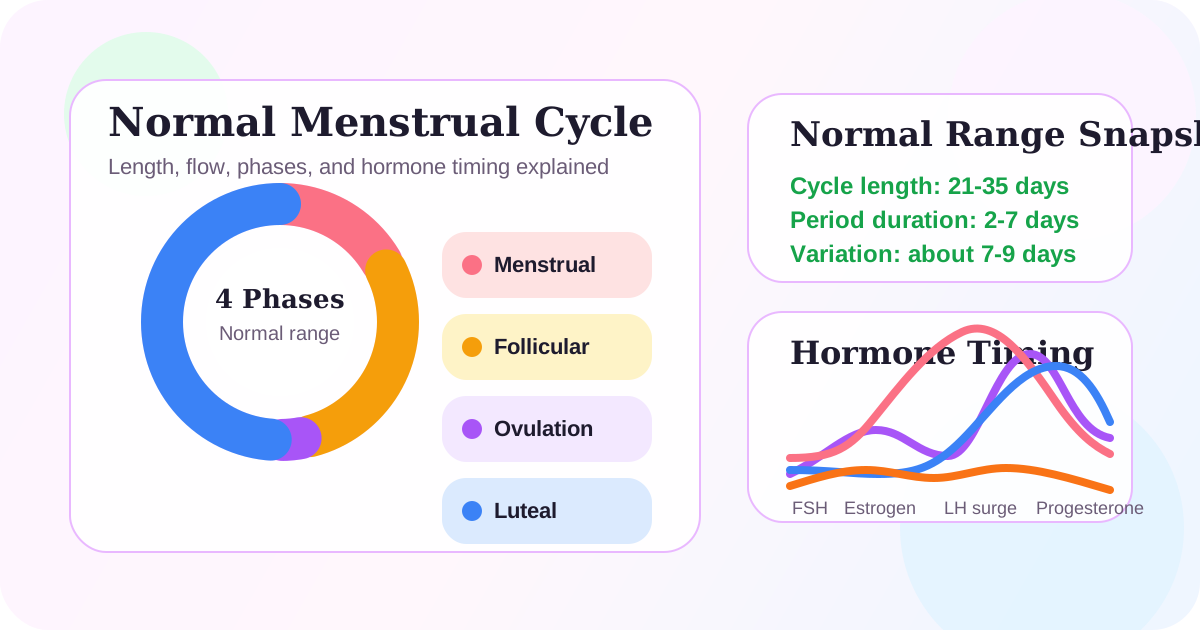
Common causes include PCOS, thyroid disorders, hyperprolactinemia, hypothalamic stress states, large weight changes, excessive exercise, perimenopause, and some medications. If you are not sure whether your cycle fits a normal pattern, start with our guide to what is a normal menstrual cycle. Clinicians may use midluteal progesterone testing, ultrasound, or broader hormone workups when they need to confirm whether ovulation is truly happening.
Medical Disclaimer
This article is for educational purposes only and does not constitute medical advice. If you have concerns about whether you are ovulating, consult a qualified healthcare provider. Anovulation has multiple potential causes that require professional diagnosis and treatment.
Frequently Asked Questions
These are the most common questions people ask when they want to understand ovulation symptoms, cervical mucus, LH surges, BBT charts, and the difference between reliable and unreliable signs of ovulation.
For source material behind this guide, see the ASRM fertility guidance, the ACOG fertility awareness overview, the Wilcox et al. NEJM 1995 study, and the Frank-Herrmann et al. 2007 paper.