Not all ovulation signs are created equal.
Some can predict ovulation 24-48 hours in advance. Some can only confirm it after it has already happened. Some are so unreliable they are basically noise.
The problem with most ovulation symptoms articles is that they list everything with equal weight. This guide ranks ovulation signs and symptoms by how much you can actually trust them, then helps you choose a method that fits your cycle.
First — The Two Things You Actually Need to Know
Before we rank the signs, two concepts change everything: prediction versus confirmation, and the real length of the fertile window. If you are trying to conceive, prediction signals matter most. If you are trying to understand your cycle, confirmation signals can still be useful.
The egg survives for a short time after release, but sperm can survive for several days in fertile cervical mucus. That is why sex 1-2 days before ovulation is often better timed than sex after you think ovulation has already happened.
Prediction vs Confirmation
Prediction signals
Appear before the egg is released. These are the signs you can act on.
Confirmation signals
Show ovulation probably already happened. Useful for charting, less useful for same-day timing.
The Fertile Window
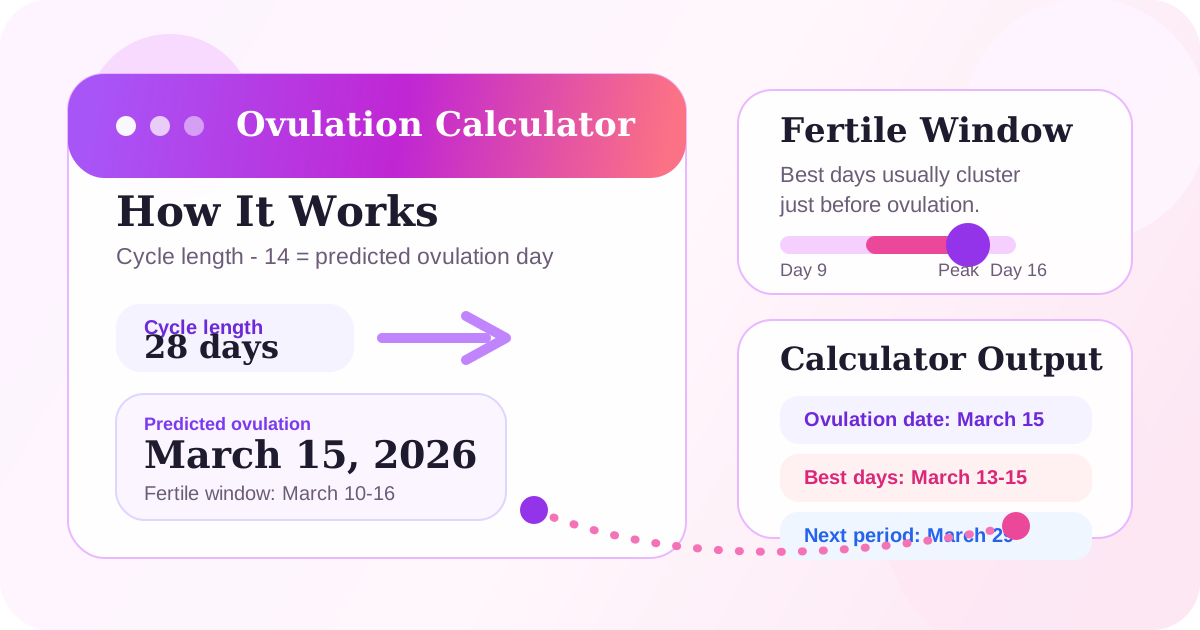
The egg survives about 12-24 hours, but sperm can survive several days in fertile cervical mucus. That creates a 6-day window.
Best conception timing is usually 1-2 days before ovulation, not after.
Ovulation Signs Rated
The Ovulation Signal Reliability Matrix
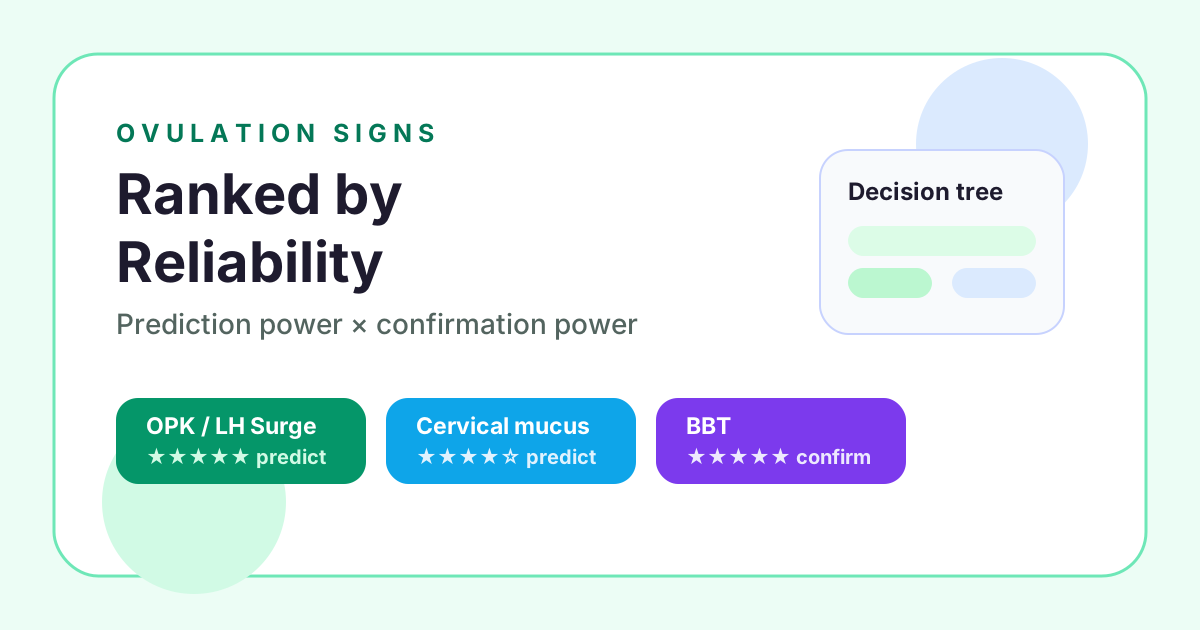
Every ovulation sign is rated on two dimensions: prediction power and confirmation power. Five stars means most reliable.
🥇LH Surge (OPK Strips)
TTC with regular cycles
Prediction: ★★★★★
Confirmation: ★★★☆☆
LH Surge (OPK Strips)
TTC with regular cycles
Prediction: ★★★★★
Confirmation: ★★★☆☆
What it is: Luteinizing hormone surges about 24-36 hours before ovulation. OPK strips detect this surge in urine, which makes them one of the few signs that can give you useful notice before egg release.
What to look for: A positive OPK means the test line is as dark as or darker than the control line. A lighter visible line is still negative. For a 28-day cycle, many people start testing around Day 10-12; with irregular cycles, Day 8-10 is safer.
The catch: PCOS can cause high baseline LH and false positives. Some surges are shorter than 10 hours and easy to miss unless you test twice daily. Digital monitors that track estrogen plus LH can help in harder cycles.
🥈Cervical Mucus (Egg-White Cervical Mucus)
Free fertile-window tracking
Prediction: ★★★★☆
Confirmation: ★★☆☆☆
Cervical Mucus (Egg-White Cervical Mucus)
Free fertile-window tracking
Prediction: ★★★★☆
Confirmation: ★★☆☆☆
What it is: Rising estrogen changes mucus from dry or sticky to creamy, watery, then egg-white cervical mucus. This is the mucus that helps sperm survive long enough to meet the egg.
What to look for: Clear, stretchy, slippery mucus that can stretch between two fingers without breaking. It often appears 1-5 days before ovulation and is the best natural clue that your fertile window is open.
The catch: It takes practice. Hormonal contraception can suppress fertile mucus, antihistamines can dry it up, and infections can change discharge. If the appearance is new, painful, itchy, or foul-smelling, do not treat it as a fertility sign.
🥉Basal Body Temperature (BBT)
Confirming ovulation
Prediction: ★☆☆☆☆
Confirmation: ★★★★★
Basal Body Temperature (BBT)
Confirming ovulation
Prediction: ★☆☆☆☆
Confirmation: ★★★★★
What it is: Progesterone after ovulation raises resting temperature by about 0.2-0.5°C or 0.2-1°F. That rise usually stays elevated through most of the luteal phase.
What to look for: A sustained temperature rise for at least 3 days after a lower-temperature phase. Take it at the same time each morning, before getting up, after at least 3 hours of sleep.
The catch: BBT rises after ovulation. By the time it rises, the egg may already be gone. Illness, alcohol, poor sleep, travel, and shift work can distort the chart, so BBT is a confirmation tool, not a real-time prediction tool.
4Mittelschmerz (Ovulation Pain)
Supporting evidence
Prediction: ★★☆☆☆
Confirmation: ★★★☆☆
Mittelschmerz (Ovulation Pain)
Supporting evidence
Prediction: ★★☆☆☆
Confirmation: ★★★☆☆
What it is: A twinge, cramp, or ache on one side as the follicle swells or ruptures. It is commonly called mittelschmerz.
What to look for: A sharp twinge, one-sided ache, or mild cramp lasting minutes to 24 hours. It may switch sides month to month.
The catch: Only a minority of people feel it consistently, timing varies, and other pelvic pain can mimic it. Ovaries do not reliably take turns; which ovary releases the egg varies. Use it as a clue, not a standalone detector.
5Breast Tenderness / Nipple Sensitivity
Soft supporting sign
Prediction: ★☆☆☆☆
Confirmation: ★★☆☆☆
Breast Tenderness / Nipple Sensitivity
Soft supporting sign
Prediction: ★☆☆☆☆
Confirmation: ★★☆☆☆
What it is: Estrogen peaks around ovulation, and some people notice temporary breast or nipple sensitivity.
What to look for: Brief tenderness around mid-cycle, especially if it reliably appears with mucus or OPK changes.
The catch: Breast tenderness is also common before a period, so it is hard to separate ovulation tenderness from PMS.
6Increased Libido
Context only
Prediction: ★★☆☆☆
Confirmation: ★☆☆☆☆
Increased Libido
Context only
Prediction: ★★☆☆☆
Confirmation: ★☆☆☆☆
What it is: Estrogen and testosterone can peak around ovulation, which may increase sexual interest.
What to look for: A noticeable mid-cycle libido shift that appears with more reliable signs.
The catch: Stress, sleep, mood, relationship dynamics, and medication affect libido. Alone, it is noisy.
7Light Spotting (Ovulation Spotting)
Occasional confirmation clue
Prediction: ★☆☆☆☆
Confirmation: ★★★☆☆
Light Spotting (Ovulation Spotting)
Occasional confirmation clue
Prediction: ★☆☆☆☆
Confirmation: ★★★☆☆
What it is: Light pink or brown spotting can happen when the follicle ruptures around ovulation.
What to look for: Very light mid-cycle spotting that is brief and not heavy.
The catch: Only a small percentage of people notice true ovulation spotting. Mid-cycle spotting is not always ovulation; cervical sensitivity, polyps, hormonal shifts, or pregnancy-related bleeding can also be involved. Persistent, heavy, or new spotting should be discussed with a doctor.
| Signal | Prediction | Confirmation | Best for |
|---|---|---|---|
| LH Surge (OPK Strips) | ★★★★★ | ★★★☆☆ | TTC with regular cycles |
| Cervical Mucus (Egg-White Cervical Mucus) | ★★★★☆ | ★★☆☆☆ | Free fertile-window tracking |
| Basal Body Temperature (BBT) | ★☆☆☆☆ | ★★★★★ | Confirming ovulation |
| Mittelschmerz (Ovulation Pain) | ★★☆☆☆ | ★★★☆☆ | Supporting evidence |
| Breast Tenderness / Nipple Sensitivity | ★☆☆☆☆ | ★★☆☆☆ | Soft supporting sign |
| Increased Libido | ★★☆☆☆ | ★☆☆☆☆ | Context only |
| Light Spotting (Ovulation Spotting) | ★☆☆☆☆ | ★★★☆☆ | Occasional confirmation clue |
Which Method Is Right For Me?
Choose the ovulation tracking method that matches your goal
This is not a quiz with a score. It is a shortcut to the method that gives you the most useful signal for your situation.
What is your primary goal?
The Symptothermal Method — When You Combine the Two Best Signals
The Symptothermal Method combines cervical mucus for prediction and BBT for confirmation. Together, they give a complete picture: window opens, ovulation happens, window closes.
The practical rule is simple: mucus tells you when to treat the cycle as fertile, while the temperature shift tells you when the fertile window has likely closed. Most people need 2-3 cycles before the chart starts to feel obvious.
CM types across the cycle
BBT line
Fertile window begins with wet or slippery mucus and closes after both signs agree: mucus dries up and BBT stays elevated for 3 days.
Anovulation clues
Signs You May NOT Be Ovulating
One or two anovulatory cycles per year can happen even with generally regular cycles. It becomes more important when it repeats, especially if you are trying to conceive.
Anovulation is more common with PCOS, during perimenopause, and after periods of intense stress, low energy availability, or over-exercise. The goal is not to panic over one odd chart; it is to notice repeated patterns that deserve a clinician's review.
How to confirm with progesterone testing
- Test about 7 days after suspected ovulation, often called a Day 21 progesterone test in a 28-day cycle.
- > 3 ng/mL: ovulation likely occurred.
- > 10 ng/mL: ovulation more strongly confirmed.
- < 3 ng/mL: likely anovulatory cycle.
How to Know When You're Ovulating Without Overreading Every Symptom
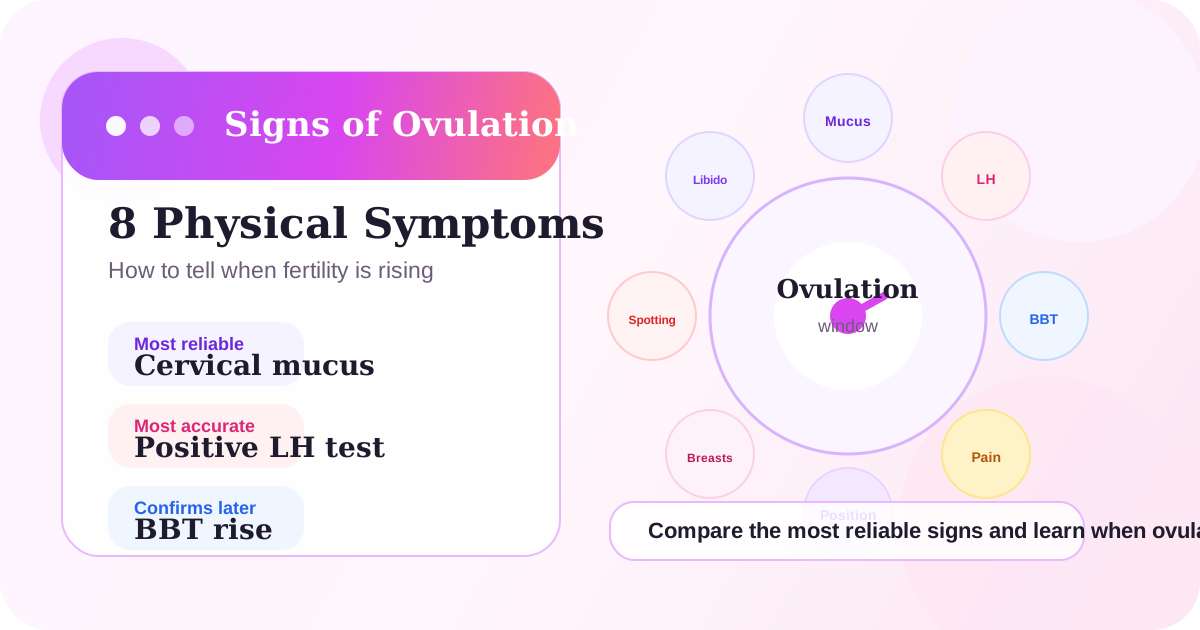
The cleanest strategy is to let each signal do the job it is good at. Use OPKs and cervical mucus to predict. Use BBT to confirm. Treat ovulation pain, libido, spotting, and breast tenderness as supporting evidence only.
The myth-busting version
BBT is excellent, but not because it tells you what to do today. It tells you what already happened. That is still valuable, especially over several cycles, but it is not the same as a real-time fertile-window alert.
Ovulation Signs by Cycle Type — Quick Reference
Regular cycles
Best method: OPK strips + cervical mucus
Reliability: High
Irregular cycles
Best method: Cervical mucus + OPK from Day 8 + BBT
Reliability: Moderate
PCOS
Best method: Digital fertility monitor + BBT
Reliability: Variable
Perimenopause
Best method: CM and BBT with caution; signs may become inconsistent
Reliability: Lower
After miscarriage
Best method: Wait for negative pregnancy test before relying on OPKs
Reliability: Variable
A Practical Week-by-Week Ovulation Tracking Plan
Days 1-7: PeriodOPK / CM / BBT actions for this phase
Note Day 1 as first full flow. Start BBT if you are charting so you have a clean low-temperature baseline. No ovulation signs are expected yet.
Days 8-10: Start watchingOPK / CM / BBT actions for this phase
Begin OPK testing, observe cervical mucus daily, and keep recording morning BBT. For irregular cycles, this early start reduces the chance of missing an early LH surge.
Days 10-14: Fertile window approachingOPK / CM / BBT actions for this phase
Watch OPK line darkening and mucus changing from creamy to watery to EWCM. If EWCM appears, do not wait for a perfect app prediction; the fertile window is already open.
Days 14-16: OvulationOPK / CM / BBT actions for this phase
A positive OPK usually means ovulation is likely within 24-36 hours. EWCM at peak is highly fertile, and sex today plus tomorrow is usually better timed than waiting for a later temperature rise.
Days 17-21: ConfirmOPK / CM / BBT actions for this phase
BBT should rise by about 0.2-0.5°C and stay elevated; mucus returns to sticky or dry. Three elevated days after the mucus shift gives stronger confirmation.
Days 22-28: Luteal phaseOPK / CM / BBT actions for this phase
BBT usually stays elevated. If it drops, your period may be 1-2 days away. If it stays elevated past your expected period, a pregnancy test becomes more useful than symptom-spotting.
Ready to find your fertile window?