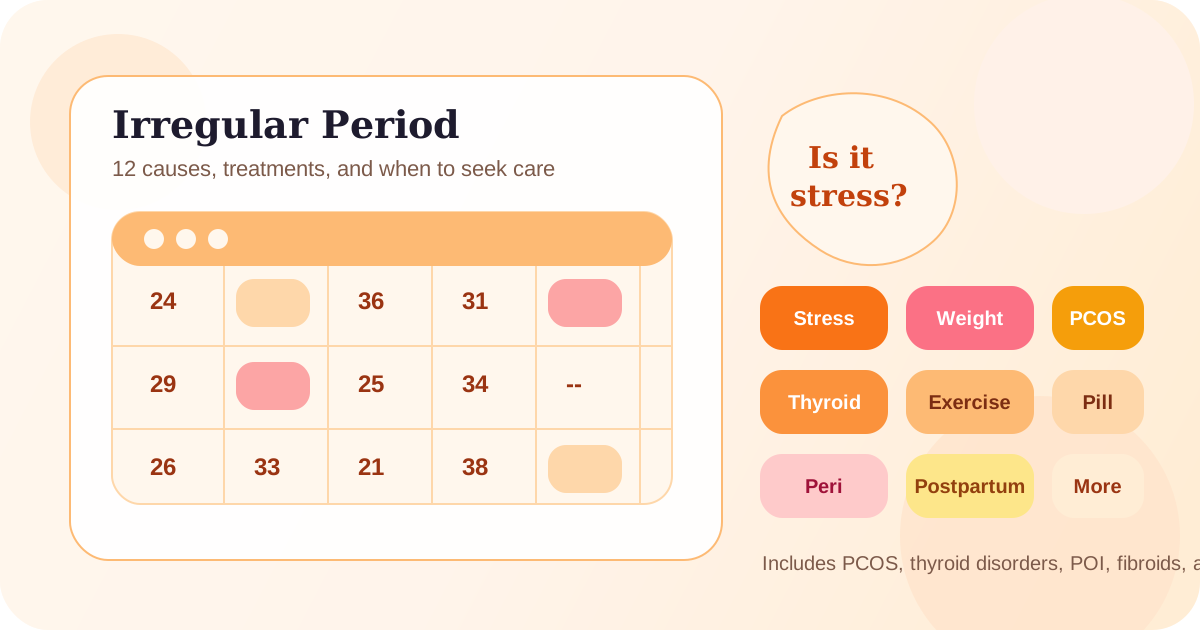
PCOS symptoms affect about 1 in 10 women worldwide, but diagnosis is often delayed. Many women are told irregular periods, acne, hair growth, or weight changes are “just stress” before anyone applies the actual pcos diagnosis criteria.
Here is what changes the conversation: PCOS is not diagnosed by one symptom or one test. It is diagnosed using the Rotterdam Criteria, a specific 2-of-3 framework that explains why PCOS can look different from person to person.
This guide explains the biology, the criteria, the four phenotypes, and the tests to expect. It also includes a do i have pcos self-assessment to help you prepare for a clearer doctor appointment.
The goal is not to self-diagnose. The goal is to arrive with a precise question: which Rotterdam criteria do my symptoms suggest, which exclusions have been checked, and what evidence is still missing?
What Is PCOS? — The Biology in 90 Seconds
PCOS is a hormonal and metabolic condition involving elevated androgens, disrupted ovulation, and sometimes polycystic-appearing ovaries. It is not diagnosed by one symptom or one scan.
The common metabolic pathway is insulin resistance. Higher insulin can signal the ovaries to make more androgens. Those androgens can disrupt the LH/FSH balance, follicles may not mature properly, and ovulation becomes irregular or absent.
Insulin resistance
→ next signal
Elevated insulin
→ next signal
Ovarian androgen production
→ next signal
LH/FSH disruption
→ next signal
Anovulation
cycle effect
Key facts
- ✓ Affects about 8-13% of reproductive-age women
- ✓ Genetic component: roughly 50% heritability
- ✓ Lean PCOS is real
- ✓ The name is misleading: follicles are not true cysts
- ✓ PCOS is lifelong, though symptoms change
The name “Polycystic Ovary Syndrome” is misleading. You can have PCOS without polycystic ovaries, and you can have polycystic-appearing ovaries without PCOS. That is why the Rotterdam Criteria matter.
PCOS also changes across life stages. Teenagers can have irregular cycles for normal developmental reasons, which makes over-diagnosis possible if criteria are applied too casually. Adults may have more obvious androgen or metabolic features. After perimenopause, bleeding patterns change, but insulin resistance and cardiovascular risk can still matter. The diagnosis should always be interpreted in context, not pulled from one lab value.
PCOS diagnosis criteria
The Rotterdam Criteria — How PCOS Is Actually Diagnosed
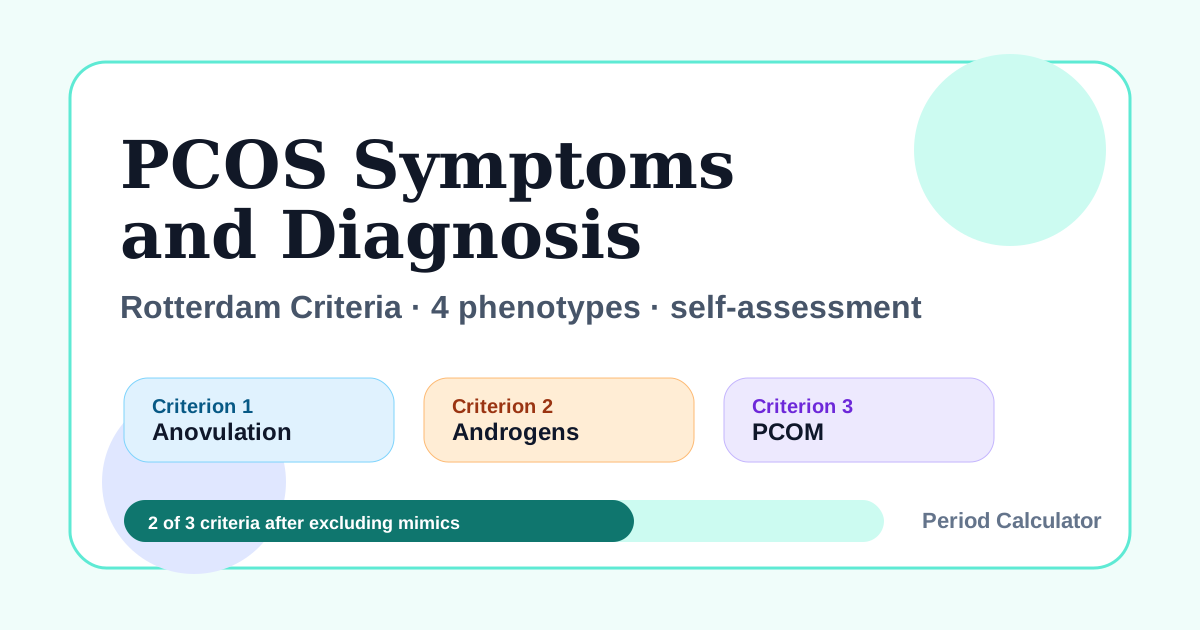
PCOS diagnosis uses a 2-of-3 framework. You need at least 2 criteria after conditions that mimic PCOS have been excluded.
Criterion 1 — Oligo/Anovulation
Ovulation is irregular, infrequent, or absent.
- • Cycles often >35 days or <21 days
- • Fewer than 8 periods per year
- • Amenorrhea or very variable cycles
Criterion 2 — Hyperandrogenism
Androgens are elevated clinically or on blood tests.
- • Hirsutism
- • Jawline acne
- • Female pattern hair loss
- • Elevated free testosterone, total testosterone, DHEA-S, or androstenedione
Criterion 3 — PCOM
Polycystic ovarian morphology appears on ultrasound.
- • 20 or more follicles per ovary by updated threshold
- • Ovarian volume >10 mL
- • Transvaginal ultrasound is preferred when appropriate
The 2-of-3 logic
Phenotype A
Anovulation + Hyperandrogenism + PCOM
Phenotype B
Anovulation + Hyperandrogenism
Phenotype C
Hyperandrogenism + PCOM
Phenotype D
Anovulation + PCOM
Before diagnosing PCOS, doctors must exclude mimics.
Thyroid dysfunction, hyperprolactinemia, congenital adrenal hyperplasia, and Cushing's syndrome when suspected can overlap with PCOS symptoms.
Why this matters in real appointments
Many people are told “your ultrasound was normal” or “your periods are regular” and the evaluation stops there. Rotterdam logic prevents that shortcut. Criteria 1 + 2 can diagnose PCOS without PCOM, and criteria 2 + 3 can fit ovulatory PCOS even when cycles look regular.
The 4 PCOS Phenotypes — Which One Are You?
Because Rotterdam uses 2 of 3 criteria, PCOS has multiple presentations. Understanding phenotype helps explain why regular periods, normal weight, or a normal ultrasound do not always end the question.
Phenotype A: Classic PCOS
MOST COMMONAnovulation + Hyperandrogenism + PCOM
Prevalence: ~50% of PCOS cases
Characteristics
- • Usually strongest metabolic profile
- • Irregular periods plus androgen symptoms
- • Higher insulin resistance risk
Treatment priorities
- • Metabolic management
- • Cycle and androgen symptom control
Phenotype B: Classic without PCOM
NORMAL ULTRASOUND POSSIBLEAnovulation + Hyperandrogenism
Prevalence: ~25% of PCOS cases
Characteristics
- • Similar risk to Phenotype A
- • No PCOM needed for diagnosis
- • Often missed after a normal ultrasound
Treatment priorities
- • Same priorities as classic PCOS
- • Do not over-rely on ultrasound
Phenotype C: Ovulatory PCOS
OFTEN MISSEDHyperandrogenism + PCOM
Prevalence: ~15% of PCOS cases
Characteristics
- • Regular or near-regular cycles
- • Androgen symptoms
- • Lower metabolic risk than A/B
Treatment priorities
- • Androgen symptom treatment
- • Metabolic monitoring over time
Phenotype D: Non-androgenic PCOS
FREQUENTLY OVERLOOKEDAnovulation + PCOM
Prevalence: ~10% of PCOS cases
Characteristics
- • Irregular periods
- • No obvious androgen signs
- • Most debated phenotype
Treatment priorities
- • Cycle regulation
- • Rule out other causes carefully
Every PCOS Symptom — With Clinical Context
PCOS symptoms are not just a checklist. Their pattern matters: pcos irregular periods plus androgen symptoms means something different from acne alone, and pcos hair loss can have several overlapping causes.
Timing matters too. Symptoms that started suddenly, progressed rapidly, or are paired with very high androgen levels need a more urgent workup because androgen-secreting tumors and adrenal disorders are rare but important exclusions. Slow changes over years are more typical of PCOS, but still deserve structured evaluation.
Irregular or absent periods~70-80% of casesLong, short, missing, or highly variable cycles are the most common PCOS clue.
Clinically, irregular often means cycles consistently longer than 35 days, shorter than 21 days, fewer than 8 periods per year, or absent periods. Elevated androgens and LH disrupt follicle development, so ovulation may not happen.
Hirsutism~65-75% with hyperandrogenismCoarse dark hair in androgen-sensitive areas such as chin, upper lip, chest, or abdomen.
Androgens stimulate follicles in sensitive areas to produce terminal hair. Clinicians may use the modified Ferriman-Gallwey score, often with thresholds around 4-6 depending on population.
Acne~30-35% of casesPersistent lower-face, jawline, chin, neck, or cystic acne can be an androgen clue.
Androgens stimulate sebaceous glands, increasing sebum and clogged pores. PCOS acne often persists beyond teenage years and may flare around bleeding.
Androgenic alopecia~20-30% of casesDiffuse crown thinning, widening part, or top-of-scalp hair loss.
DHT can miniaturize scalp follicles in genetically susceptible women. PCOS hair loss can respond to anti-androgen strategies, but thyroid dysfunction, iron deficiency, and stress shedding should also be checked.
Weight gain or difficulty losing weight~40-60% of casesCommon with insulin resistance, but PCOS does not require overweight.
Insulin resistance can raise insulin, promote fat storage, and worsen androgen production. This loop can make weight loss genuinely harder.
Acanthosis nigricans~30% of casesDark, velvety skin patches that suggest significant insulin resistance.
It often appears in neck creases, armpits, groin, or under the breasts. It is a visible clue that fasting glucose, insulin, HbA1c, and lipids may be worth checking.
Mood symptomsDepression ~35-40%; anxiety ~45-50%Mood symptoms are common in PCOS and deserve direct care.
Mechanisms include hormonal effects, insulin resistance, sleep disruption, and the psychological burden of acne, hair growth, hair loss, fertility concerns, and weight stigma.
Rotterdam Self-Assessment
Loading the symptom assessment...
The Diagnostic Tests — What to Expect
Blood tests, often Day 2-5 of cycle
- ✓ Total testosterone and free testosterone if available
- ✓ DHEA-S and sometimes androstenedione
- ✓ LH and FSH; LH:FSH ratio can support but is not diagnostic
- ✓ TSH, prolactin, and 17-OHP to exclude mimics
- ✓ HbA1c, fasting glucose, fasting insulin, and lipid panel
- ✓ AMH may support the picture but is not a Rotterdam criterion
Pelvic ultrasound
Ultrasound assesses follicle count and ovarian volume, and can rule out other structural causes. It is not always necessary if ovulation disruption and hyperandrogenism are clearly present.
Updated thresholds use 20 or more follicles per ovary or ovarian volume greater than 10 mL when modern ultrasound is used.
What your doctor might miss
Free testosterone is often more sensitive than total testosterone. AMH is not official Rotterdam criteria but may be useful context. If concerns are dismissed, asking for referral to a gynecologist or reproductive endocrinologist is reasonable.
Bring cycle dates, photos or notes about hair growth and acne flares, hair-loss timing, medication history, contraception history, weight changes, and family history of diabetes or PCOS. This makes the appointment less dependent on memory and helps your clinician distinguish PCOS from thyroid disease, prolactin issues, hypothalamic amenorrhea, medication effects, or adrenal causes.
Long-Term Health Risks — Beyond Your Periods
PCOS is not only a reproductive condition. It is a metabolic condition that benefits from regular monitoring, even when symptoms feel manageable.
This does not mean every person with PCOS will develop diabetes, heart disease, or endometrial problems. It means the baseline risk is higher, so prevention and monitoring should be built into care instead of waiting until a problem becomes obvious.
Metabolic
Type 2 diabetes risk 3-7x higher
Mechanism: Insulin resistance can progress to impaired glucose tolerance.
Monitoring: HbA1c or fasting glucose every 1-3 years.
Cardiovascular
Risk factors increased
Mechanism: Dyslipidemia, hypertension, and insulin resistance cluster over time.
Monitoring: Blood pressure annually; lipid panel every 1-3 years.
Endometrial
Cancer risk 2-3x higher
Mechanism: Chronic anovulation can mean unopposed estrogen exposure.
Monitoring: Discuss progestogen protection if fewer than 3-4 periods/year.
Mental Health
Depression ~35-40%; anxiety ~45-50%
Mechanism: Hormones, insulin resistance, sleep, and symptom burden all contribute.
Monitoring: Screen mood symptoms directly and treat them as part of care.
Monitoring schedule
Track your cycles — PCOS makes pattern recognition even more important.