If you are in your late 30s or 40s and noticing irregular periods, sleep disruption, mood shifts, hot flashes, or symptoms you cannot quite explain, you may be in perimenopause.
Or you may not be. Perimenopause symptoms overlap significantly with thyroid dysfunction, PCOS, depression, anxiety, medication effects, and ordinary life stress. A symptom list alone is not enough.
This guide explains the STRAW+10 staging framework, every major symptom with clinical context, and an “am i in perimenopause” self-assessment tool to help you identify your likely stage and prepare for a better doctor appointment.
The goal is not to turn a normal life transition into a diagnosis. The goal is to stop minimizing symptoms that affect sleep, work, sex, mood, relationships, and long-term health. Perimenopause is normal, but suffering through treatable symptoms is not required.
Perimenopause vs. Menopause — The Definitions That Actually Matter
These terms are often used interchangeably, but they mean different things. Understanding the definitions helps you interpret perimenopause symptoms without jumping too quickly to one explanation.
The most important distinction is that menopause is confirmed after the fact. If you have gone 8 months without a period, you are not yet officially menopausal; you are in the late transition unless another cause explains the missing periods. If bleeding returns before 12 months, the clock resets.
Perimenopause
The transition leading up to menopause, beginning when ovarian function starts declining and ending 12 months after the final menstrual period.
Usually 4-8 years; average start age about 47.
Track cycle changes and symptoms.
Menopause
A single point in time defined after 12 consecutive months without a menstrual period.
Average age about 51 in the UK/US; natural range roughly 45-55.
Confirmed retrospectively.
Postmenopause
All time after the menopause point.
Symptoms can continue for years; GSM can worsen over time.
Discuss bone, cardiovascular, sexual, and urinary health.
Premature Ovarian Insufficiency (POI)
See your doctorOvarian function declines before age 40.
Affects about 1% of women.
See your doctor promptly.
Early Menopause
See your doctorNatural menopause between ages 40 and 45.
Affects about 5% of women.
See your doctor; HRT may be discussed.
The contraception complication
Hormonal contraception can mask cycle changes and suppress symptoms that signal perimenopause. If you use the combined pill, hormonal IUS, implant, injection, or progestogen-only pill, staging by periods alone may not work.
Perimenopause stages
The STRAW+10 Framework — What Stage Are You In?
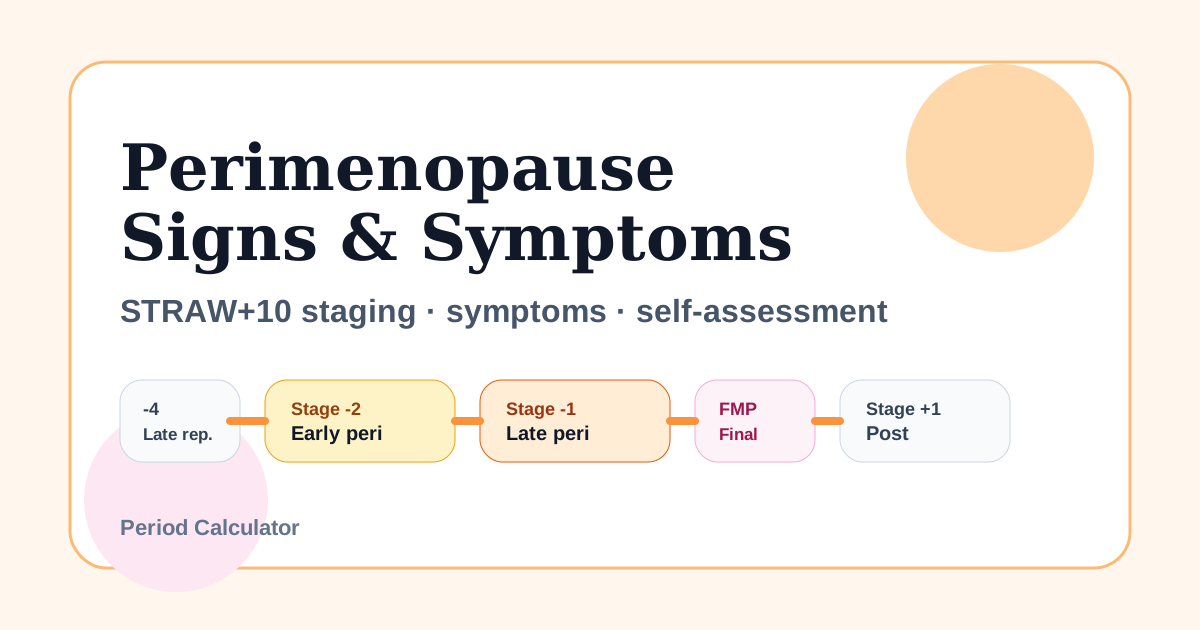
STRAW+10 is the international staging framework for reproductive aging. It is more useful than a symptom list because it anchors symptoms to cycle pattern and time.
The framework also explains why two women the same age can have completely different experiences. One may be in Stage -2 with cycle variability and worse PMS; another may be in Stage -1 with 60-day gaps, night sweats, and sleep disruption.
Stage -5
Peak reproductive
Regular cycles
Stage -4
Late reproductive
FSH may rise
Stage -3
Early transition
Subtle change
Stage -2
EARLY PERIMENOPAUSE
7+ day variability; 1-3 years; PMS, sleep, mood
Stage -1
LATE PERIMENOPAUSE
60+ day gap; 1-3 years; hot flashes, GSM, brain fog
FMP
Final menstrual period
Known only later
Stage +1
Postmenopause
After 12 months
Key insight
Stage -2 is defined by persistent cycle variability. Stage -1 is defined by at least one 60+ day gap and is when vasomotor symptoms often become most prominent. This distinction matters because Stage -1 is when HRT is commonly discussed for quality-of-life symptoms.
Every Perimenopause Symptom — With Clinical Context
Signs of perimenopause are easiest to interpret when you combine symptom type, age, and cycle stage. A single symptom can overlap with thyroid disease, PCOS, depression, sleep deprivation, or medication effects.
A new symptom pattern after 40 is often perimenopause, but often is not always. If symptoms are sudden, severe, one-sided, associated with very heavy bleeding, or happening before age 40, the safer approach is to check for other causes rather than assuming hormones explain everything.
Irregular periodsStarts at: Stage -2Nearly universalThe first and most reliable sign is usually cycle pattern change.
Cycles may become longer, shorter, or more variable by 7+ days from your usual pattern. Flow can become heavier before it becomes lighter because estrogen fluctuations can build a thicker lining.
Hot flashes and night sweatsStarts at: Stage -1~75-80%Sudden heat, flushing, sweating, and sleep-disrupting night sweats.
Estrogen decline affects the hypothalamic thermostat, making small temperature shifts trigger sweating and flushing. Hot flashes often peak around the final menstrual period and can last an average of about 7 years.
Sleep disruptionStarts at: Stage -2 to -1~40-60%Difficulty falling asleep, waking overnight, or early morning waking.
Night sweats, progesterone decline, anxiety, and estrogen effects on sleep architecture can all contribute. Poor sleep amplifies mood, brain fog, pain, and weight symptoms.
Mood changesStarts at: Stage -2Depression ~18-38%; anxiety ~35-50%Irritability, anxiety, low mood, or feeling “not like myself.”
Estrogen fluctuation affects serotonin, dopamine, and GABA systems. Risk is higher with a history of PMS, PMDD, postpartum depression, or previous depression.
Brain fogStarts at: Stage -2 to -1~60%Word-finding difficulty, memory lapses, and concentration problems.
Estrogen influences neurotransmitter systems involved in memory and attention. Symptoms are usually mild and often improve after the transition.
GSM: vaginal and urinary symptomsStarts at: Stage -1 and postmenopause~40-50%; up to ~80% postmenopauseDryness, pain during sex, urinary urgency, recurrent UTIs, or itching.
Genitourinary Syndrome of Menopause happens as estrogen decline thins and dries vaginal and urinary tissues. Unlike hot flashes, GSM often worsens without treatment.
Other physical symptomsStarts at: VariableCommonJoint pain, palpitations, migraines, skin changes, hair changes, and weight shifts.
Estrogen affects inflammation, cardiac electrical stability, migraine thresholds, collagen, fat distribution, and muscle mass. Weight changes around the abdomen are physiological, not a failure of willpower.
STRAW+10 Self-Assessment
Loading the stage assessment...
What to Expect at Your Doctor's Appointment
Perimenopause is a clinical diagnosis. There is no single definitive test, and in women over 45 with typical symptoms, NICE guidance supports diagnosis by symptom pattern rather than routine blood tests.
This can feel frustrating if you want proof. But in perimenopause, hormone levels swing from week to week. A normal FSH on Tuesday does not erase three months of skipped periods and night sweats. Good clinical diagnosis uses the pattern, not a single snapshot.
Blood tests and limitations
- ✓ FSH: elevated values can support ovarian decline, but fluctuate.
- ✓ Estradiol: also fluctuates, so one result is limited.
- ✓ TSH: checks thyroid overlap.
- ✓ Full blood count and ferritin: useful with heavy bleeding or fatigue.
- ✓ Under 45: tests are more useful, especially to evaluate POI.
Diagnosis approach
Your doctor should ask about cycle pattern, age, symptoms, contraception, pregnancy possibility, thyroid symptoms, mood history, bleeding heaviness, and red flags. Bring cycle tracking data if you have it.
For women over 45, typical symptoms and cycle changes often matter more than FSH. For women under 40, prompt evaluation for POI is important.
HRT
HRT is the most effective treatment for vasomotor symptoms. Modern options often use transdermal estradiol and micronized progesterone, which have a different risk profile from older WHI-era formulations. For many healthy women under 60 or within 10 years of menopause, benefits can outweigh risks.
Non-hormonal options
SSRIs/SNRIs, fezolinetant, CBT, and vaginal estrogen for GSM may be discussed. These are useful when HRT is not wanted or not appropriate.
Lifestyle
Exercise supports mood, sleep, bone, muscle, and cardiovascular health. Alcohol reduction can improve hot flashes and sleep. Calcium, vitamin D, strength training, and smoking cessation matter for long-term health.
Symptoms that should not be dismissed as just perimenopause
Bleeding after 12 months with no period, bleeding that soaks protection hourly, chest pain, fainting, severe new headaches, neurological symptoms, unexplained weight loss, or pelvic pain should be assessed promptly. Perimenopause can coexist with other conditions.
The Long-Term Health Picture — Beyond Symptoms
The hormonal changes of perimenopause affect bones, heart health, cognition, sexual health, and urinary comfort. This is not about fear; it is about prevention.
This stage is also a useful moment to reset baseline health: blood pressure, lipids, glucose, strength, sleep, alcohol intake, smoking status, and sexual comfort. Small interventions made during the transition can have a long tail of benefit.
Bone
Bone loss accelerates in the 5-7 years around menopause; osteoporosis affects about 1 in 3 women over 50.
Mechanism: Estrogen protects bone density.
- ✓ Weight-bearing and resistance exercise
- ✓ Calcium and vitamin D
- ✓ Discuss DEXA if risk factors exist
- ✓ HRT can protect bone density
Cardiovascular
Cardiovascular risk increases after menopause as blood pressure, lipids, and visceral fat may shift.
Mechanism: Estrogen has cardioprotective effects.
- ✓ Annual blood pressure
- ✓ Lipid panel around menopause
- ✓ Exercise and smoking cessation
- ✓ Discuss HRT timing if appropriate
Cognitive
Brain fog is common and usually improves; severe or progressive changes need evaluation.
Mechanism: Estrogen affects neurotransmitters and brain energy systems.
- ✓ Protect sleep
- ✓ Treat hot flashes
- ✓ Exercise
- ✓ Seek care for persistent decline
Sexual
GSM and libido changes are common and treatable.
Mechanism: Lower estrogen affects vaginal and urinary tissues; sleep, mood, pain, and relationship factors affect desire.
- ✓ Use lubricants for sex
- ✓ Use moisturizers regularly
- ✓ Ask about vaginal estrogen
- ✓ Discuss pain rather than tolerating it
Track your cycle changes — the pattern is your most useful data.