If you are reading this during your period, you want the fastest answer first. Skip to what to do right now. If you are between periods and want to reduce cramps long-term, the prevention section is where the real month-to-month change happens.
This guide covers both. Every period cramps relief method is ranked by how fast it works and how strong the evidence is, so you can separate “try this now” from “build this over the next few cycles.”
Why Period Cramps Happen — The 60-Second Biology
Period cramps are mostly caused by prostaglandins: hormone-like compounds produced in the uterine lining. When your period starts, prostaglandins trigger uterine muscle contractions to expel the lining. Those contractions temporarily restrict blood flow to the uterus, and that restriction is part of the pain.
This is why period cramps relief is not all the same. NSAIDs work upstream by blocking prostaglandin production. Heat works downstream by relaxing muscle and improving blood flow. Hormonal contraception works even earlier by thinning the lining, so there is less tissue to shed and usually fewer prostaglandins.
1. Prostaglandins
Produced in the uterine lining
2. Uterine contractions
Muscle tightens to shed lining
3. Blood flow restriction
Temporary ischemia
4. Pain
Cramping in pelvis, back, thighs
Primary dysmenorrhea
Pain caused by prostaglandins alone, with no identified underlying condition. It often starts a few hours before bleeding or on Day 1, peaks on Days 1-2, and eases by Day 3-4.
Secondary dysmenorrhea
Pain amplified by an underlying condition such as endometriosis, adenomyosis, fibroids, or pelvic inflammatory disease. It may start earlier, last longer, worsen over time, or respond poorly to standard treatment.
How to get rid of period cramps fast
What to Do RIGHT NOW — Fastest Relief Methods
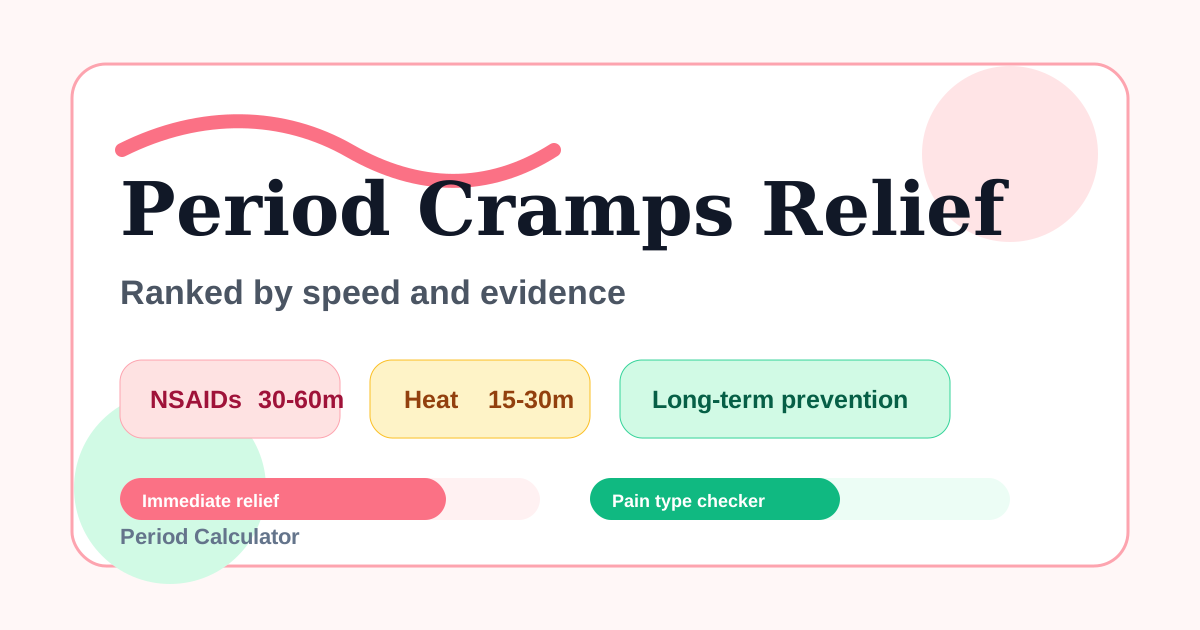
If you are reading this during your period, start here. These methods can work within minutes to 2 hours, and they are ranked by evidence strength. For most primary cramps, the strongest fast plan is NSAIDs if safe for you, plus heat.
🥇NSAIDs: ibuprofen or naproxen
Best first-line option for primary period cramps when you can take NSAIDs safely.
★★★★★Onset: 30-60 min
🥇NSAIDs: ibuprofen or naproxen
Best first-line option for primary period cramps when you can take NSAIDs safely.
NSAIDs do not just mask pain. They block cyclooxygenase enzymes involved in prostaglandin production, so they target the main driver of uterine cramping. They work best when taken at the first sign of cramps or 1-2 hours before pain usually peaks.
| Medicine | Common OTC dosing | Notes |
|---|---|---|
| Ibuprofen | 400mg every 6-8 hours with food | Avoid if NSAIDs are unsafe for you. |
| Naproxen sodium | 220-440mg, then 220mg every 8-12 hours | Longer acting for some people. |
🥈Heat therapy
A heat pad or patch relaxes uterine muscle and improves blood flow.
★★★★☆Onset: 15-30 min
🥈Heat therapy
A heat pad or patch relaxes uterine muscle and improves blood flow.
Heat addresses the downstream part of cramp pain: tight uterine muscle and reduced blood flow. Use continuous low-level heat on the lower abdomen, warm but not burning, ideally around 39-40°C for at least 30 minutes. Heat plus ibuprofen is often stronger than either alone.
Temperature guide: aim for warm, continuous heat around 39-40°C, never burning heat directly on skin.
🥉TENS
A drug-free option using mild electrical pulses through skin pads.
★★★☆☆Onset: 20-40 min
🥉TENS
A drug-free option using mild electrical pulses through skin pads.
TENS may reduce pain through gate-control signaling and endorphin release. It has less evidence than NSAIDs, but it can be useful when medication is not an option, or as an add-on during work or school.
4Paracetamol / acetaminophen
Helpful for some pain, but less targeted for cramps than NSAIDs.
★★☆☆☆Onset: 30-60 min
4Paracetamol / acetaminophen
Helpful for some pain, but less targeted for cramps than NSAIDs.
Paracetamol is a general pain reliever. It does not block prostaglandins in the same practical way NSAIDs do, so it is usually less effective for period cramps. Use it if NSAIDs are unsafe for you, or ask a pharmacist whether combining standard-dose paracetamol and ibuprofen is appropriate.
5Movement and light exercise
Best for mild to moderate pain, especially walking or gentle yoga.
★★★☆☆Onset: during/after
5Movement and light exercise
Best for mild to moderate pain, especially walking or gentle yoga.
Light movement improves pelvic blood flow and increases endorphins. If pain is severe, do not force high-intensity exercise. Try walking, swimming, light cycling, child's pose, supine twist, cat-cow, or supported bridge.
Yoga poses to try: child's pose, supine twist, cat-cow, and supported bridge.
Reduce cramps month-to-month
Long-Term Prevention — What Actually Reduces Cramps
Prevention is slower, but it can change the baseline. These methods take weeks to months because they work by changing prostaglandin production, lining thickness, inflammation, muscle spasm, or your body's pain response across several cycles.
🥇Hormonal contraception
Most effective long-term medical prevention for many people with primary dysmenorrhea.
★★★★★Onset: 1-3 cycles
🥇Hormonal contraception
Most effective long-term medical prevention for many people with primary dysmenorrhea.
Hormonal contraception can suppress ovulation, thin the endometrium, reduce blood loss, and lower prostaglandin production. Many people notice meaningful pain reduction within three cycles, but the right method depends on health history and goals.
| Option | Cramp evidence | Practical note |
|---|---|---|
| Combined pill | Strongest | Often reduces flow and pain. |
| Hormonal IUS | Strong for heavy/painful periods | May dramatically reduce bleeding. |
| Implant | Variable | Irregular bleeding can occur. |
| Injection | Variable | May stop periods for some people. |
🥈Omega-3 fatty acids
Fish oil may reduce prostaglandin production over several cycles.
★★★☆☆Onset: 2-3 months
🥈Omega-3 fatty acids
Fish oil may reduce prostaglandin production over several cycles.
Omega-3s compete with arachidonic acid, a prostaglandin precursor. A practical approach is 1-2g EPA+DHA daily, or fatty fish such as salmon, mackerel, or sardines 2-3 times per week. Discuss supplements first if you take blood thinners.
🥉Magnesium
A muscle-relaxing mineral that may reduce uterine spasm.
★★★☆☆Onset: 1-2 months
🥉Magnesium
A muscle-relaxing mineral that may reduce uterine spasm.
Magnesium glycinate or citrate is often better tolerated than magnesium oxide. Many people start around 200mg daily and increase carefully toward 400mg if tolerated. Loose stools are the common limiting side effect.
4Vitamin D if deficient
Most useful when a blood test shows low vitamin D.
★★☆☆☆Onset: 2-3 months
4Vitamin D if deficient
Most useful when a blood test shows low vitamin D.
Low vitamin D is associated with worse dysmenorrhea in some studies. Supplementation is most rational if you are deficient. If your level is already normal, extra vitamin D is less likely to be the missing piece.
5Dietary pattern
Supportive, not instant: more omega-3s and magnesium-rich foods, fewer inflammatory patterns.
★★☆☆☆Onset: 2-3 months
5Dietary pattern
Supportive, not instant: more omega-3s and magnesium-rich foods, fewer inflammatory patterns.
The most plausible changes are increasing fatty fish, leafy greens, nuts, seeds, legumes, and ginger, while reducing heavy alcohol, highly processed foods, and excess red meat if they dominate your diet. Diet usually needs several cycles before you can judge effect.
6Regular exercise routine
Prevention works better when movement is a baseline habit, not only a crisis tool.
★★★☆☆Onset: 2-3 cycles
6Regular exercise routine
Prevention works better when movement is a baseline habit, not only a crisis tool.
Regular aerobic exercise and yoga programs have trial support for reducing pain severity. Think consistency rather than intensity: walking, cycling, swimming, mobility work, or yoga several times per week.
Not recommended as core period pain treatments
- ✗ Vitex or chasteberry for cramps specifically.
- ✗ Evening primrose oil.
- ✗ Most marketed “period supplement” blends.
- ✗ Castor oil packs, which lack clinical evidence for cramps.
What Type of Period Pain?
The diagnostic self-check
Not all period pain has the same pattern. Answer five questions to see whether your symptoms look more like primary dysmenorrhea, possible secondary dysmenorrhea, or a mixed pattern worth monitoring.
This tool provides general guidance. It does not diagnose any medical condition. Your answers stay in your browser and are not stored or transmitted.
When Period Pain Is a Red Flag
Most period pain is primary dysmenorrhea: uncomfortable, sometimes intense, but not dangerous. The patterns below deserve medical attention because they can point to secondary dysmenorrhea or another pelvic problem.
See a doctor if:
- 🔴 Pain regularly prevents normal daily activities such as work or school.
- 🔴 Pain is getting progressively worse over months or years.
- 🔴 Pain does not respond to NSAIDs at standard doses.
- 🔴 Pain starts more than 2 days before your period.
- 🔴 Pain continues after your period ends.
- 🔴 Deep pain during sex.
- 🔴 Pain when using the toilet during your period.
- 🔴 Sudden severe pain that is different from your usual cramps.
Conditions to discuss with your doctor
- Endometriosis: affects about 10% of women and can have a 7-10 year diagnosis delay.
- Adenomyosis: endometrial-like tissue in the uterine muscle, often with heavy painful periods.
- Fibroids: benign growths that can cause heavy, prolonged, painful bleeding.
- Pelvic inflammatory disease: infection that can contribute to chronic pelvic pain.
What to bring to your appointment
The Evidence Summary — Quick Reference
Use this table when you need the practical answer: what works, how strong the evidence is, how fast it acts, and who it best fits.
| Method | Evidence | Speed | Best for |
|---|---|---|---|
| NSAIDs | ★★★★★ | 30-60 min | Immediate relief |
| Heat therapy | ★★★★☆ | 15-30 min | Immediate relief |
| TENS | ★★★☆☆ | 20-40 min | Drug-free option |
| Paracetamol | ★★☆☆☆ | 30-60 min | Cannot take NSAIDs |
| Exercise/yoga | ★★★☆☆ | During/after | Mild-moderate pain |
| Hormonal contraception | ★★★★★ | 1-3 cycles | Long-term prevention |
| Omega-3 fish oil | ★★★☆☆ | 2-3 months | Long-term prevention |
| Magnesium | ★★★☆☆ | 1-2 months | Long-term prevention |
| Vitamin D | ★★☆☆☆ | 2-3 months | If deficient |
| Dietary changes | ★★☆☆☆ | 2-3 months | Supportive prevention |
Not recommended: insufficient evidence
Vitex for cramps specifically, evening primrose oil, most “period supplement” blends, and castor oil packs.
Track your pain patterns to identify your baseline.