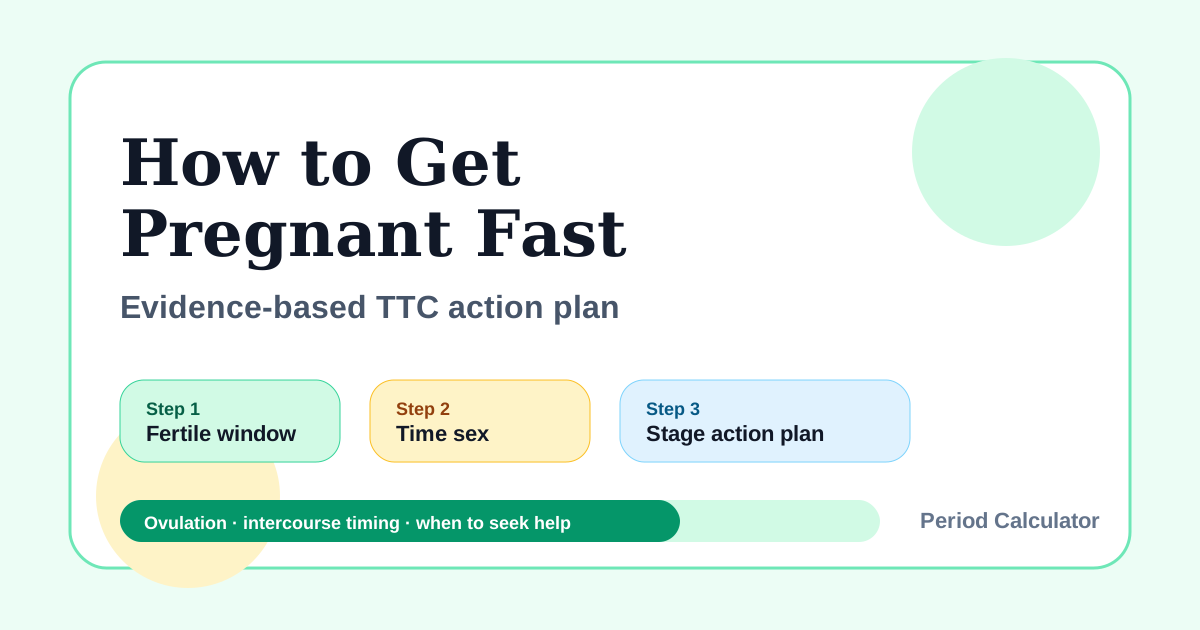
“How to get pregnant fast” has an honest answer: there is no guaranteed fast track. But there is a significant difference between trying randomly and trying strategically.
The research is clear: timing intercourse to the fertile window, confirming ovulation, and addressing modifiable factors can meaningfully shorten time to conception for many couples trying to conceive.
This guide gives you an evidence-based TTC action plan organized by where you are in the journey, not a generic tips list that applies to everyone equally.
The Biology First — What Actually Has to Happen
How to get pregnant fast has an honest answer: there is no guaranteed fast track. But there is a major difference between trying randomly and trying strategically.
Ovulation
Egg released; survives 12-24 hours
Fertilization
Sperm meets egg in the tube
Tube travel
Embryo travels toward uterus
Implantation
Usually 6-12 DPO
hCG production
Pregnancy test hormone begins rising
Egg survival
12-24 hours
Sperm survival
Up to 5 days
Fertile window
6 days total
Implantation
6-12 DPO
~25-30% per cycle, even with perfect timing
Most couples do not conceive in cycle 1. That is not failure; it is normal biology.
Cumulative conception rates with well-timed intercourse
Cycle 1
~25-30%
Cycle 3
~50-60%
Cycle 6
~75%
Cycle 12
~85-90%
Best time to get pregnant
Step 1 — Find Your Fertile Window
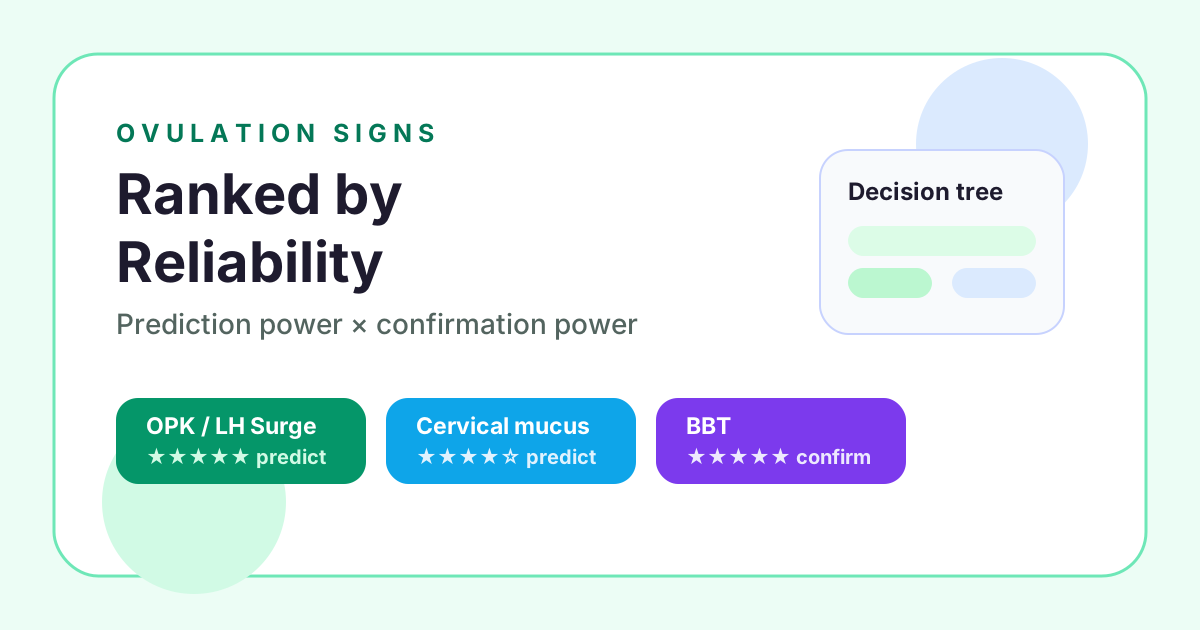
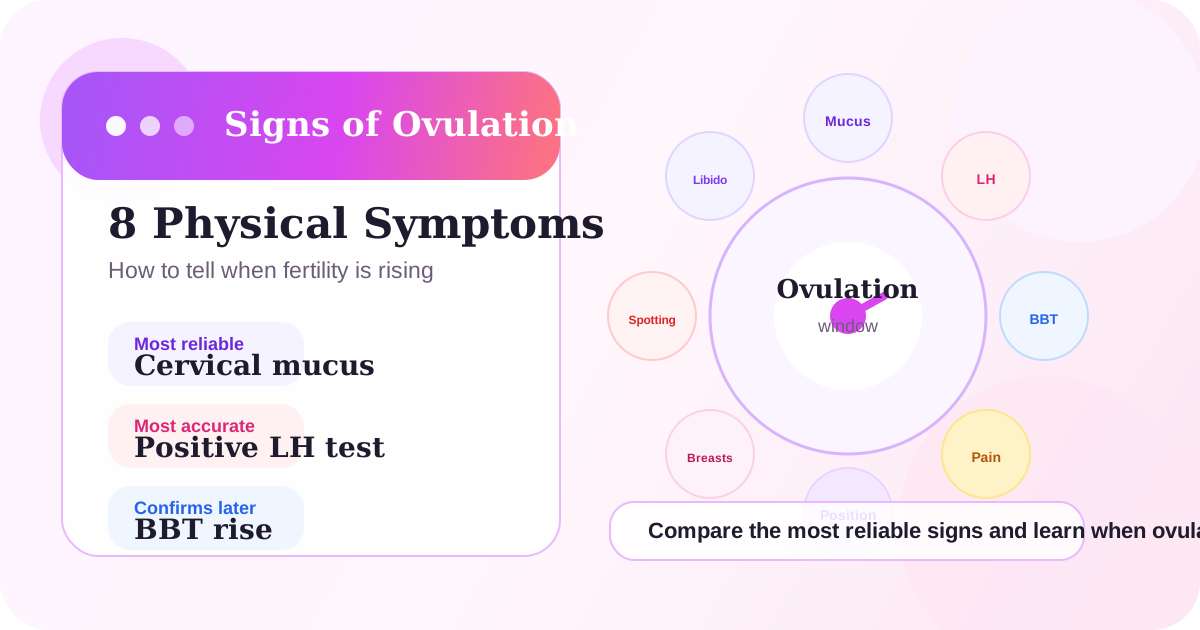
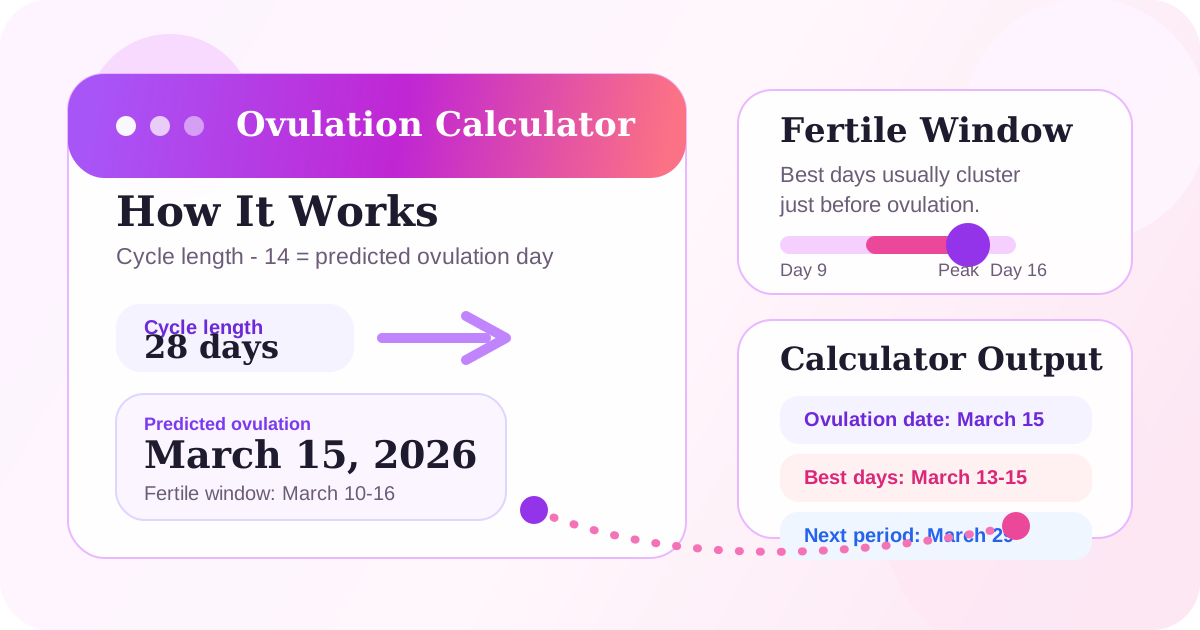
The single highest-impact TTC action is identifying ovulation and timing intercourse inside the fertile window: the 5 days before ovulation plus ovulation day.
Probability by day relative to ovulation
Day -5
Lower
Day -4
Lower
Day -3
Moderate
Day -2
High
Day -1
Very high
Day 0
Highest
Day +1
Near zero
| OPK type | Cost | Ease | What it detects | Best for |
|---|---|---|---|---|
| Standard LH strips | Low | Requires line reading | LH surge | Most TTC users |
| Digital OPKs | Medium | Easy | LH surge | Clear yes/no reading |
| Advanced OPKs | Higher | Easy | Estrogen rise + LH surge | Wider fertile-window signal |
Step 2 — Optimize Intercourse Timing
Once you know the fertile window, the practical question is how often to have sex when trying to conceive. Daily sex and every-other-day sex both work well; the difference is small enough that pressure should not become the plan.
| Frequency | Conception rate | Recommendation |
|---|---|---|
| Daily during fertile window | ~37% per cycle | Best odds if sustainable |
| Every other day | ~33% per cycle | Nearly as good, less pressure |
| Once weekly | ~15% per cycle | Often misses the window |
What does not matter
- ✗ Sexual position
- ✗ Lying down after sex
- ✗ Orgasm timing
- ✗ Sex outside the fertile window
Lubricants and sperm
Step 3 — Preconception Health Optimization
Preconception health affects both time to conception and pregnancy outcomes. Focus on the changes with evidence rather than every supplement on the internet.
🥇 Folic acid
★★★★★
Start now. 400mcg/day minimum; 5mg/day for some higher-risk situations. Ideally start 3 months before conception.
🥈 Stop contraception
Timeline varies
Most methods return quickly; Depo-Provera can take 6-18 months. You can try immediately after stopping the pill.
🥉 Vitamin D
★★★☆☆
Deficiency is common and linked with fertility and miscarriage risk. Test if possible; 400-2000 IU/day is common.
Weight / BMI
Both BMI <18.5 and >30 are associated with longer time to conception, but do not delay TTC for weight loss unless advised by your doctor.
Alcohol
Heavy drinking reduces fertility. Light drinking evidence is mixed; many choose minimal or zero after ovulation.
Smoking
One of the highest-impact changes for both partners. It affects ovarian reserve, miscarriage risk, sperm count, motility, and morphology.
Caffeine
Keep to under 200mg/day during TTC and pregnancy as a practical ceiling.
For men: 50% of fertility cases involve a male factor
Sperm takes about 72 days to develop, so changes take around 3 months to show in sperm quality. Key actions: quit smoking, reduce heavy alcohol, avoid heat to the testicles, avoid anabolic steroids, maintain healthy weight, and consider folic acid and zinc if appropriate.
TTC Action Plan
Loading the stage-based action plan...
The Fertility Myths — What Does Not Work
MYTH:
Elevating your hips after sex helps
REALITY:
Sperm reach the cervix quickly after ejaculation. Body position afterward has no proven effect.
MYTH:
Certain sex positions are better
REALITY:
No position has been shown to improve conception rates. Sperm travel effectively against gravity.
MYTH:
Orgasm helps conception
REALITY:
There is no reliable clinical evidence that female orgasm increases conception rates.
MYTH:
You must save up sperm
REALITY:
For normal sperm counts, daily fertile-window sex is fine. Abstinence over 5 days may reduce sperm quality.
MYTH:
Stress causes infertility
REALITY:
Normal life stress does not cause infertility. The 'just relax' advice is unhelpful and places unfair blame.
MYTH:
Fertility supplements guarantee results
REALITY:
Folic acid is essential and vitamin D helps if deficient. Most fertility blends are marketed beyond evidence.
When to See a Doctor — The Clear Thresholds
Under 35
After 12 months of regular, well-timed intercourse.
35-40
After 6 months.
Over 40
After 3 months, or immediately if concerned.
See sooner if:
- 🔴 Irregular or absent periods
- 🔴 Known or suspected PCOS
- 🔴 Known or suspected endometriosis
- 🔴 Previous pelvic infection or STI
- 🔴 Previous cancer treatment
- 🔴 Male partner had undescended testicles or vasectomy reversal
- 🔴 Known genetic condition
- 🔴 Two or more miscarriages
Find your fertile window — the most important step in TTC.